Blog / Licensure & Credentials / Travel Nursing
More states have joined the NLC — now it’s time for the big holdouts to get on board!
By Jo · Facebook LinkedIn Email
The train keeps on rolling: month after month, year after year, more and more states are joining the Nurse Licensure Compact!
Progress seems unstoppable. An impressive roster of NLC laws has been enacted and implemented in recent years. No fewer than 36 states have now fully implemented the Compact.
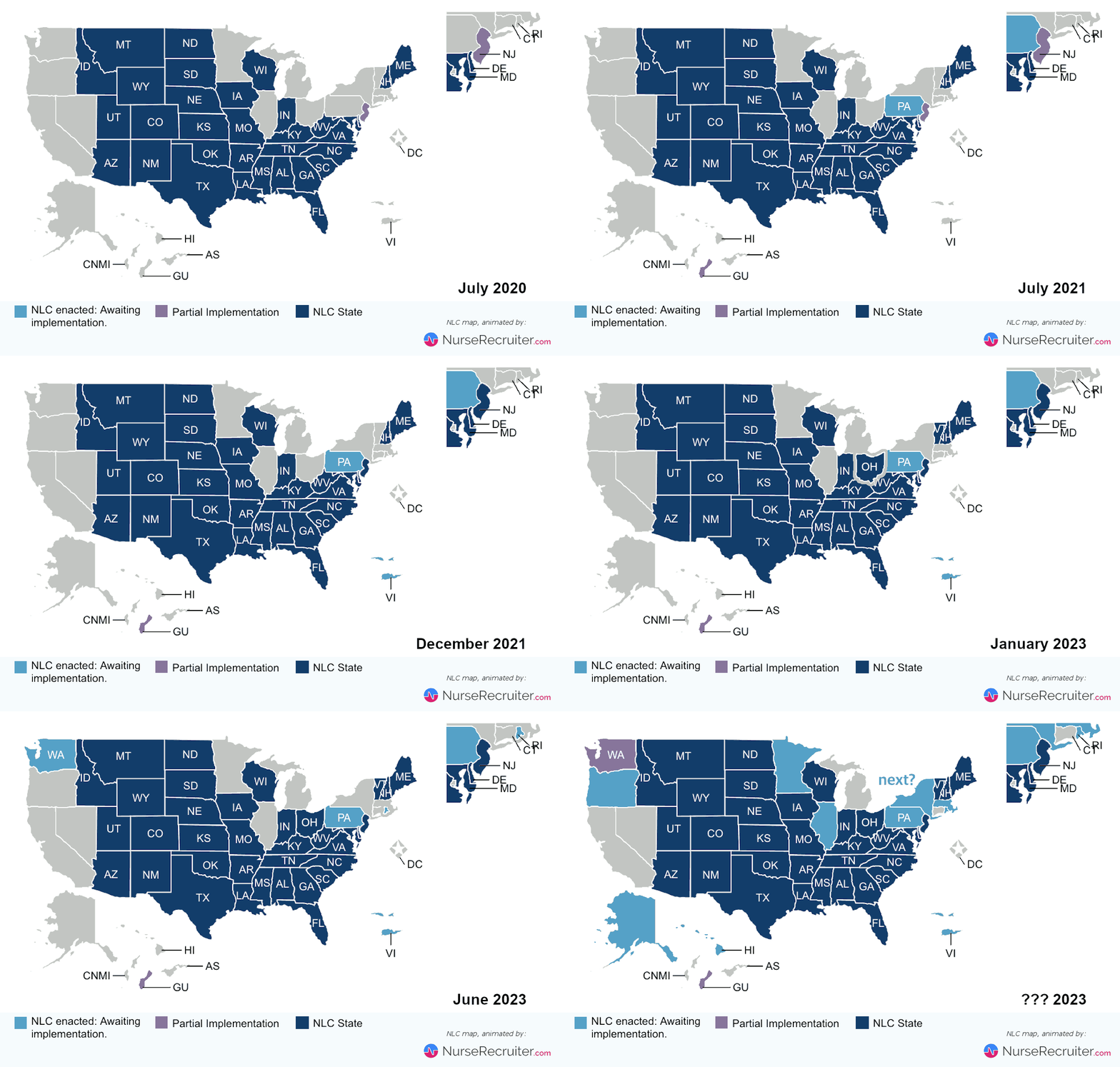
Since our last eNLC post, Ohio, New Jersey and Vermont have all implemented the NLC. Pennsylvania, Rhode Island, Guam and the Virgin Islands have at least enacted laws to adopt the NLC. Just last week, the state of Washington partially implemented the NLC, so nurses who hold a multistate license in other NLC states can now practice there.
Update: good NLC news from Pennsylvania!
For travel nurses in particular, these changes are a blessing. Applying for multiple separate state licenses can take a ridiculous amount of time and paperwork — the last thing you want after a long shift! It’s expensive too: updating your nursing licenses can easily cost you a thousand dollars every two or three years.
It’s no coincidence that the State Representative who introduced the bill in Alabama, which enacted the NLC in 2019, was a nurse herself. The lawmakers who introduced these bills and kept pushing them forward have been doing yeoman’s work for ordinary nurses.
But now it’s time for the final stretch. The few states stubbornly holding out include some of the largest of the country, like California and New York. Draft laws to adopt the NLC are languishing in the legislatures of Massachusetts, Minnesota, Illinois, Oregon, Alaska and Hawaii. Michigan has been an especially vexing case, because a bill was passed there in 2020 only to be vetoed by Gov. Whitmer, and new legislative efforts had to start from scratch.
THE LONG MARCH OF PROGRESS: HOW THE NLC HAS KEPT EXPANDING
- March 2021: enacted and partially implemented in Guam — tentative implementation in 2023
- July 2021: enacted in Pennsylvania
- November 2021: implemented in New Jersey (apply now!)
- December 2021: enacted in the Virgin Islands — tentative implementation in 2023
- February 2022: implemented in Vermont (apply now!)
- January 2023: implemented in Ohio (apply now!)
- April 2023: enacted in Washington
- July 24, 2023: partially implemented in Washington: nurses with a multistate license in other NLC states can practice in the state (apply now!)
Addressing the nursing shortage, one state at a time
At NurseRecruiter.com we get a front row seat to the nursing shortage and the tireless efforts of nurses to plug gaps wherever they appear. We know how many of you are willing to move halfway across the country if that’s where you’re needed, upending your lives if a job opportunity appears that matches your interests and provides the right compensation.
It has been 24 years since the Nurse Licensure Compact was first launched to make it easier for you to practice your profession in other states. And thanks to its continuous expansion, you are now able to pursue nursing job opportunities elsewhere without bureaucratic hassle… in most of the country. But let’s be honest here. The more states join the NLC, the more glaring the exceptions become!
Here’s our take. The momentum is clearly on the side of providing nurses with more freedom to work wherever they want and wherever they are needed. And when an unstoppable force meets an immovable object, one of the two will have to give way. We’re deep into the 21st century, and nurses have honed their expertise to perform to their full capacity whether they work in Minnesota, Mississippi, or Massachusetts.
It’s simply not fair that nurses in states like New York face hurdles to working in other states which nurses licensed elsewhere can skip. And it’s a waste of opportunities that nurses who could help plug the nursing shortage in New York can’t do so without jumping through additional hoops.

A Texas RN and Air Force spouse testified in Louisiana that she had had to wait half a year just to get her license, when she would have been able to start practically overnight in another state. That’s just not right — nor reasonable. It’s time to level the playing field!
The Covid-19 pandemic should have really hit home the point here. Politicians and nursing boards in non-compact states were left scrambling as hospitals filled up at breakneck speed, passing emergency measures to allow nurses from outside to come in. Nurses from compact states who were eager to volunteer were left waiting when every minute counted.
When disaster strikes and local nurses are overwhelmed, states which have joined the NLC can save lives more quickly. When understaffed rural hospitals struggle to find local nurses, those in compact states can adapt more swiftly. We’re stronger when we can come together!
The Enhanced Nurse Licensure Compact (eNLC) system which was introduced in 2018 addressed legitimate concerns about safety and background checks. With all respect to any apprehensions that might still exist, we say: yield to the inevitable. Address any potential downsides with accompanying legislation. Let’s get this journey, which has already taken so long, done!
FIVE ADVANTAGES OF THE NLC, SUMMARIZED
- Making it easier to hire and work as travel nurses. There has been an explosion in demand for travel nurses, who are plugging urgent staffing gaps at short notice — and enjoying the financial perks! Every state which joins the NLC expands the pool of nurses who can take on a travel assignment with minimal hassle.
- Saving you time and money. No more headaches updating multiple state licenses and tracking different educational requirements. Not just useful for travel nurses! Do you live close to a state border, eager to apply for jobs or per diem assignments on the other side? Do you regularly move across the country because your spouse works in the military? Are family obligations calling you back home? The NLC eases your transition every time.
- Improved patient care. The more states join the NLC, the more uniform licensing requirements become, ensuring that nurses across the country meet high standards of practice. Regions with pronounced nursing shortages can recruit qualified nurses from across the country. Nurses can focus more quickly on patient care instead of burdensome paperwork.
- Facilitating telehealth services. Expanding the NLC allows more nurses to provide remote services across state lines without impediments.
- Speeding up disaster response. When, God forbid, the next pandemic or natural disaster strikes, compact state nurses can jump in to help right away.
Do you agree? Add your voice in the comments! But if you’re not so sure, we’re eager to hear from you as well. Do you practice in one of the states that are not in the NLC yet, and would you like to keep it that way? Tell us why!