Blog / Workforce & Policy / The Nursing Shortage / Nursing School
Record numbers want to be nurses. Nursing schools turned away 93,176 of them.
By Diana Perez · Facebook LinkedIn Email
Two sets of numbers came out this spring, and they only make sense read together.
The first is unambiguously good news. Applications to nursing school are surging. Entry-level bachelor's enrollment rose 7.6%, to 283,303 students. After years of anxious talk about whether anyone still wants this job, a great many people plainly do.
The second is the same story from the other end. 93,176 qualified applicants were turned away. Not rejected for being unsuitable, but turned away because there was no capacity to teach them. And of those who did get through and sat the licensing exam, the pass rate just fell to its lowest level in years.
The pipeline is not short of people wanting to enter. It is short of the means to get them through.
The bottleneck is a pay gap
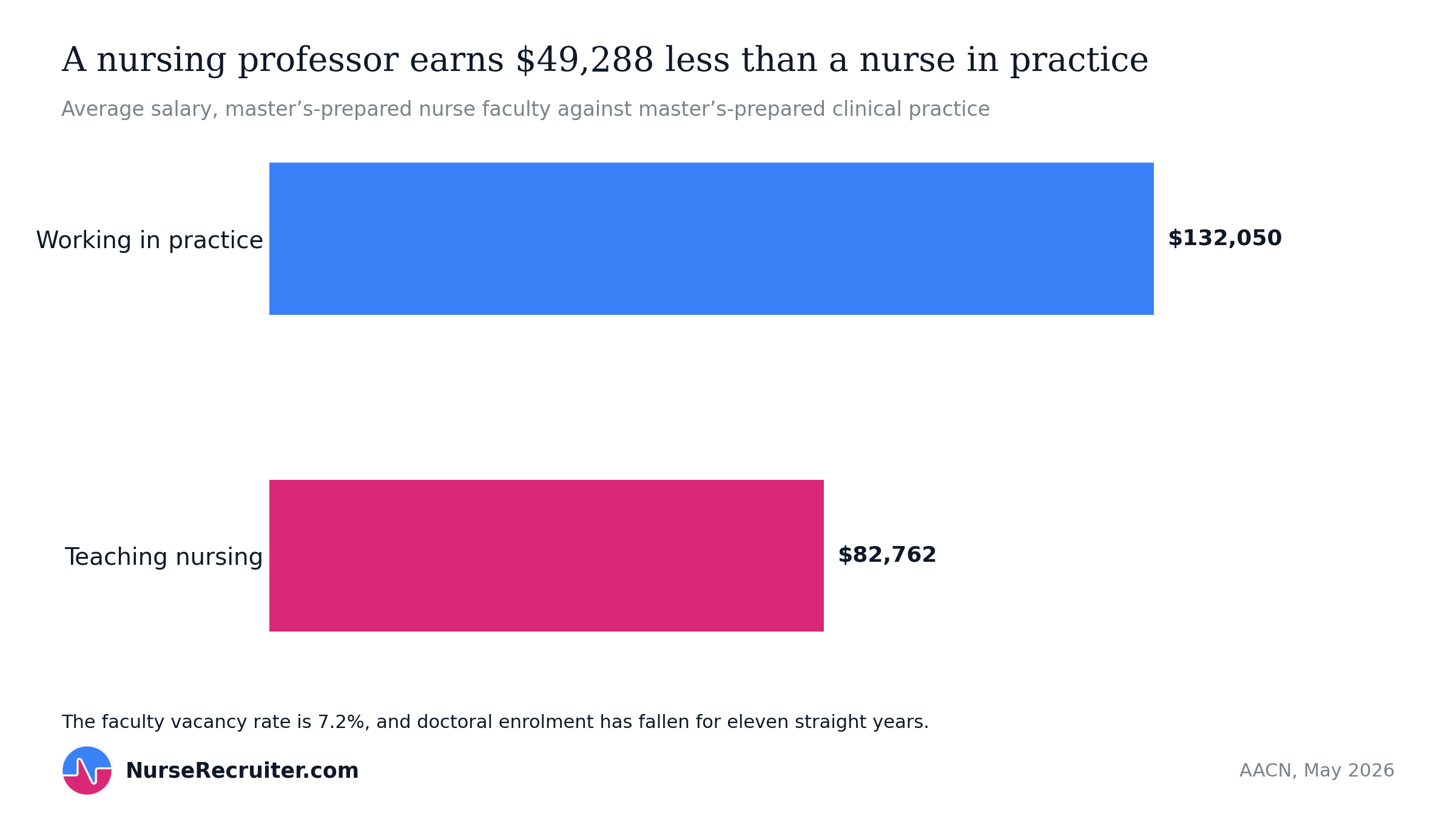
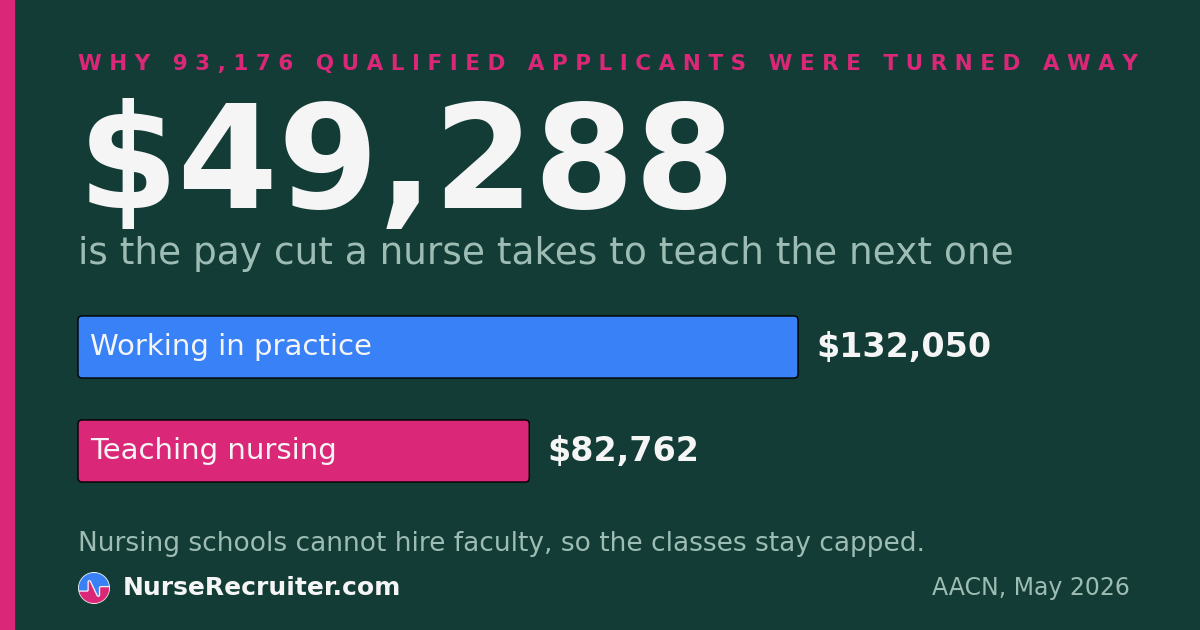
Here is the whole problem in one comparison. A master's-prepared nurse teaching in a school of nursing averages $82,762. The same qualification in clinical practice averages $132,050.
Nearly fifty thousand dollars a year, to do the job that produces every future nurse.
Predictably, schools cannot fill their faculty posts. The vacancy rate stands at 7.2%. And the supply of people who could eventually fill them is shrinking rather than growing, because doctoral enrollment in nursing has fallen for eleven consecutive years, down to 4,077 students.
That last figure is the one to worry about. Faculty shortages are not a problem you can fix quickly, because the fix requires people who spent years earning a doctorate to then take a substantial pay cut. Every year the doctoral pipeline shrinks is a constraint on class sizes a decade from now.
So when you read that 93,176 applicants were turned away, do not picture an admissions committee being selective. Picture a school that cannot hire anyone to teach the extra section.
And fewer of those who get through are passing
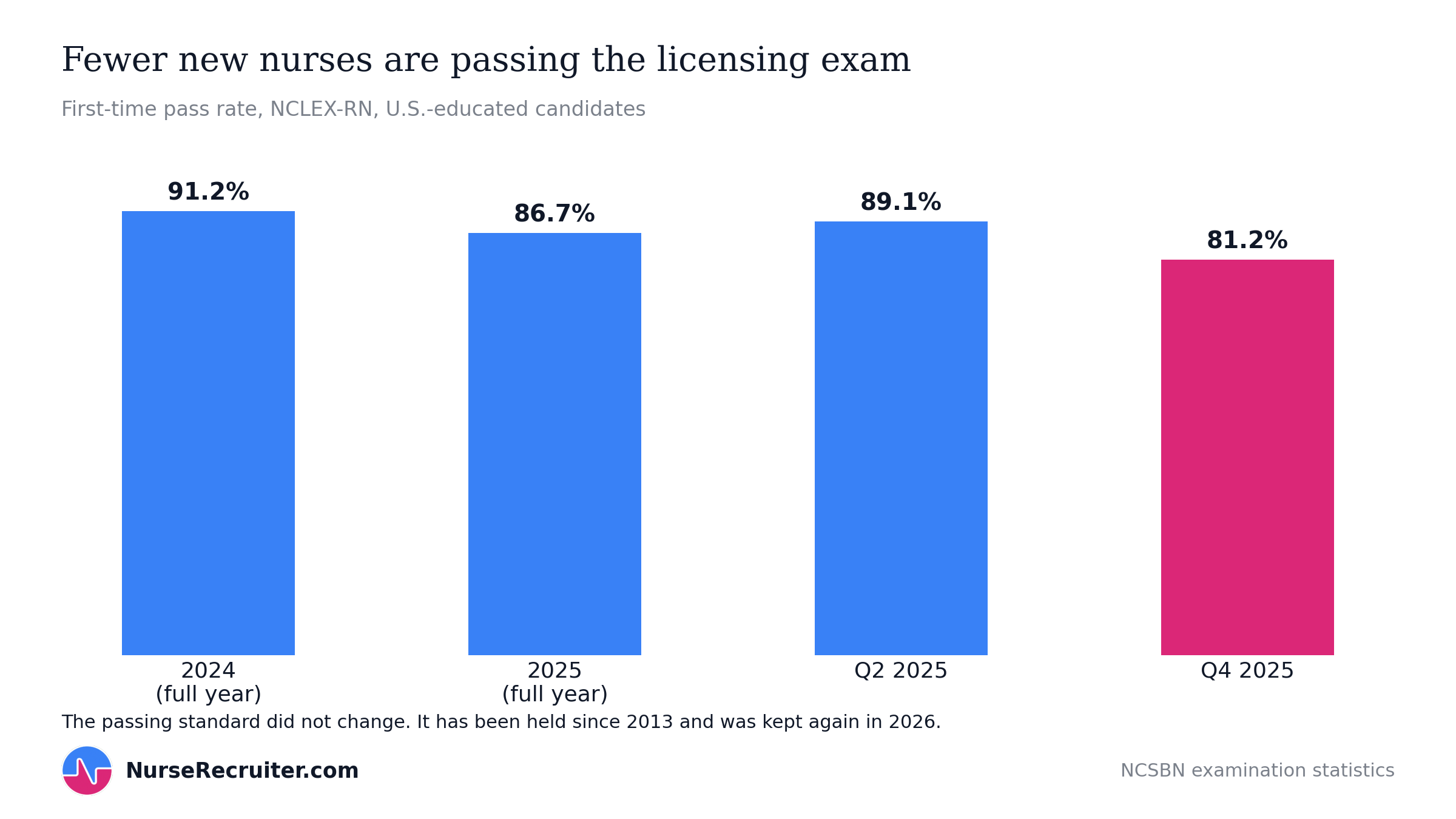
The first-time pass rate for U.S.-educated candidates on the registered nurse licensing exam fell from 91.2% to 86.7%. Within the year it deteriorated further, from 89.1% in the second quarter to 81.2% in the fourth.
The obvious explanation would be that the exam got harder. It did not. The passing standard has been held since 2013, was reviewed again this year, and was kept unchanged. Whatever is happening, it is not a scoring artifact. The same bar is being cleared by fewer people.
For internationally educated candidates the first-time pass rate is 47.3%, down from 53.8%.
Nobody has a definitive account of why yet, and we are not going to invent one. Cohorts that trained through the pandemic disruption are still moving through. Larger classes taught by stretched faculty are a plausible contributor. Clinical placement quality varies enormously. All of these are hypotheses, and it will take another year or two of data to separate them.
What is not in doubt is the arithmetic. Enrollment up 7.6% and the pass rate down 4.5 points means the number of new nurses actually reaching the workforce is growing far more slowly than the enrollment figure alone suggests.
Why this matters now specifically
Because of who is leaving at the other end.
The national workforce survey found the median nurse is now 50 years old, with nurses under 30 making up just 7.9% of the profession and four in ten working nurses saying they intend to retire or leave within five years.
A workforce that old needs a large, reliable intake to stand still. What it has instead is enormous demand for nursing school places, a faculty shortage capping supply, and a licensing exam that fewer graduates are clearing on the first attempt.
None of those three is quickly fixable, and they compound.
What to do about it if you employ nurses
Assume the new-graduate pipeline stays tight. Any workforce plan that assumes a growing supply of new nurses is planning on the enrollment number rather than the licensure number. Use the second one.
New graduates will need more support, not less. If pass rates are falling, the nurses arriving on your units are on average less far along than the equivalent cohort three years ago. That is an argument for lengthening orientation and strengthening residency programmes, which is also, conveniently, what keeps first-year nurses from leaving. Roughly a fifth of new hires go within twelve months, and that is the most expensive turnover there is.
Consider whether you are part of the bottleneck. Clinical placements are one of the constraints on how many students a school can take. A hospital that can take more students is directly enlarging the pipeline it will later hire from, and getting a long look at candidates before anyone else does.
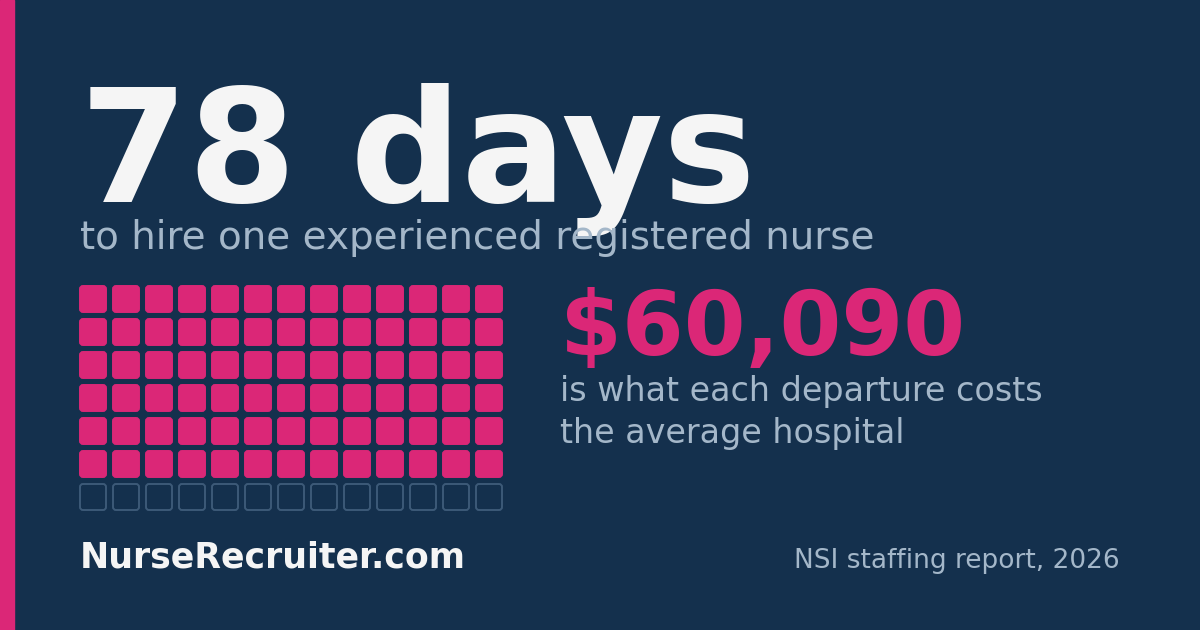
And keep competing for the nurses who already exist. For the next several years, most of your hires will be experienced nurses moving from somewhere else rather than new graduates. That is a reach problem: post where the audience is only nurses, search the database of more than half a million registered nurses, or set up a Search Agent so candidates come to you.
If you are a nursing student reading this
Two things, both true.
The exam is not getting harder, but the cohort result is getting worse, and you should treat first-time passing as something to prepare for deliberately rather than assume. Whatever your school gives you, more practice questions and more time is the cheapest insurance available.
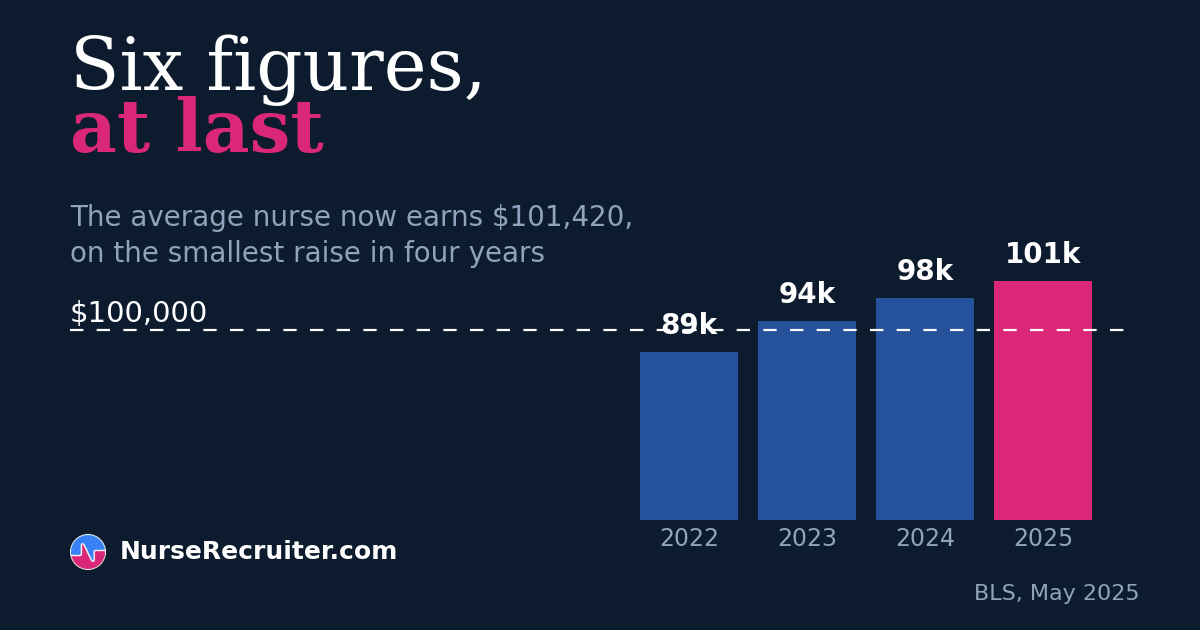
And the market waiting for you is strong. Nursing pays six figures on average, the workforce is ageing out ahead of you, and employers are competing for exactly the people your class will become. The bottleneck is getting in and getting licensed. After that, the numbers are all on your side.