Blog / Working Conditions / Workplace Violence
Five in six nurses were attacked, threatened or abused at work last year
By Diana Perez · Facebook LinkedIn Email
We have written about this twice before, in 2022 and again a few weeks later when the response from readers made clear how badly it needed saying. A new survey of nurses came out this summer, and the reason to return to it is that the number has not improved.
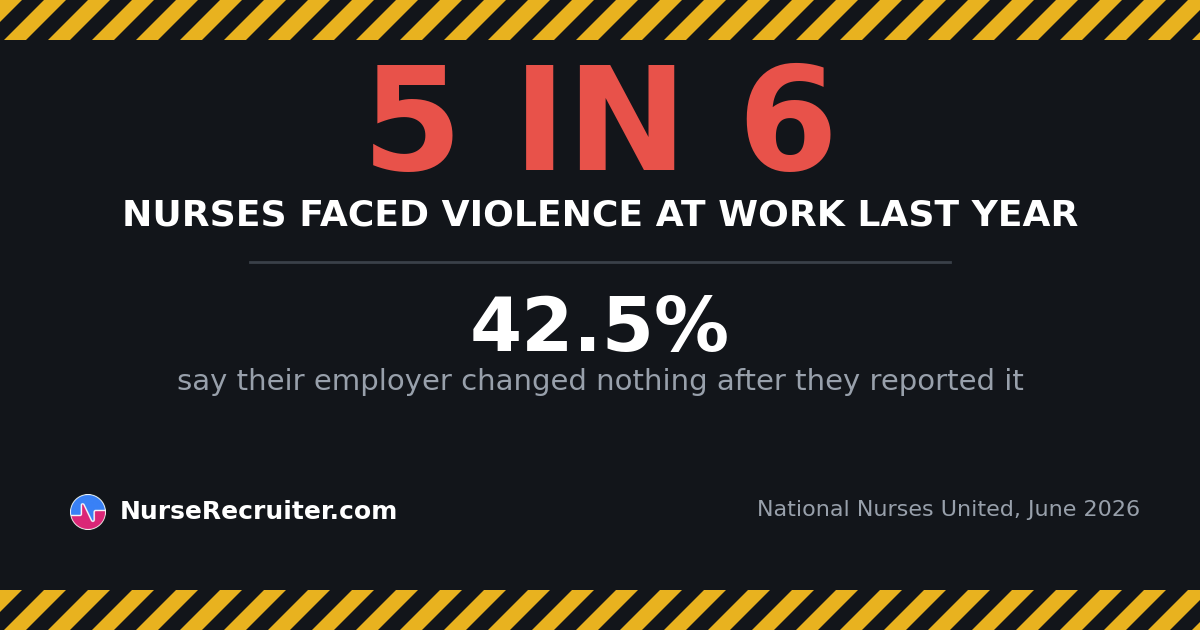
84.8% of nurses experienced workplace violence in the past year. Five in six. Not over a career, but in twelve months.
The second number is the one that should anger you
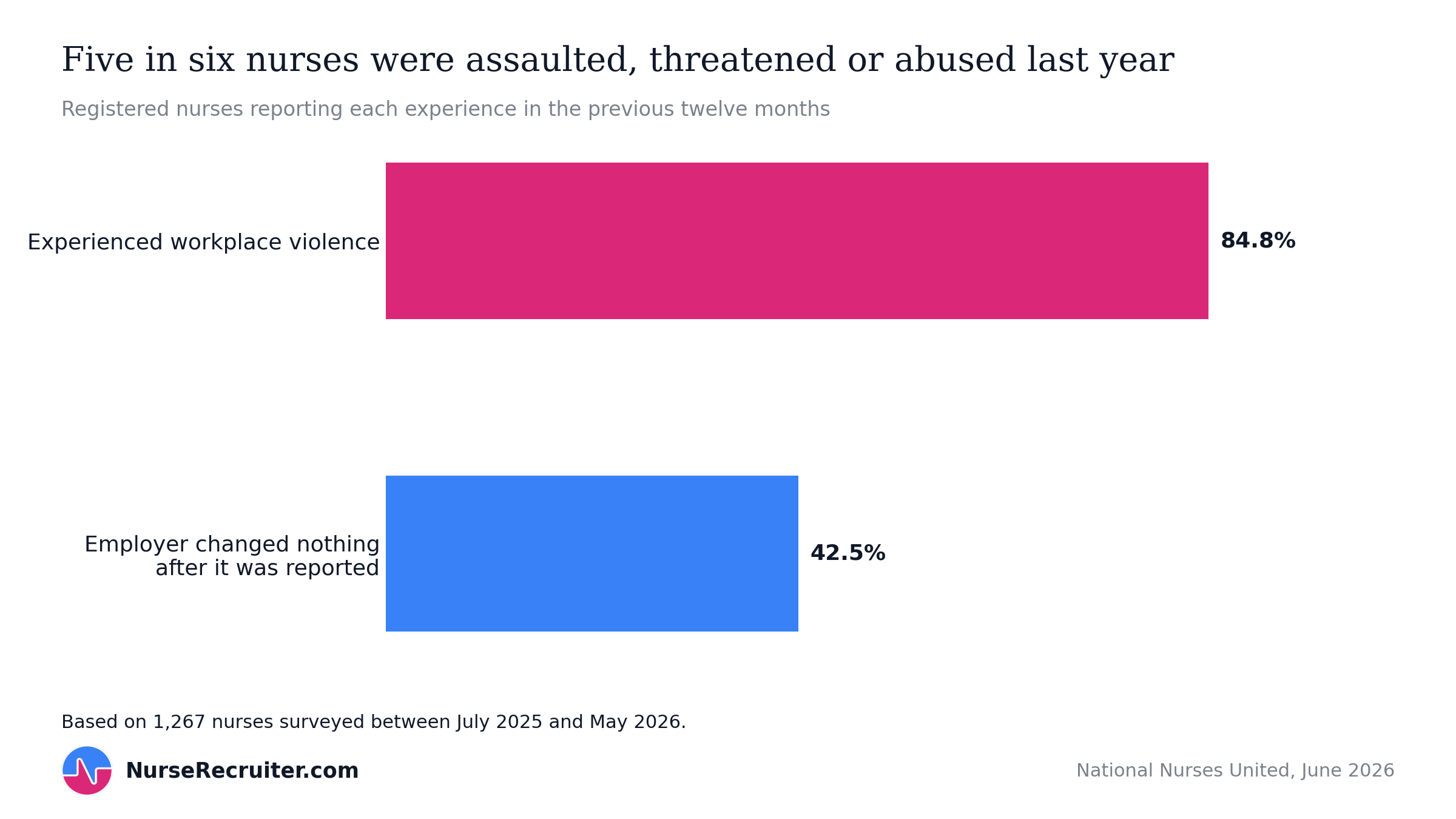
42.5% of nurses say their employer changed nothing after they reported it.
That is the finding that turns a public safety problem into an employment one. Being assaulted at work is terrible and, in an emergency department at three in the morning, sometimes hard to prevent. Filing a report and watching nothing happen is a choice somebody made.
It also explains the chronic under-reporting that dogs every attempt to measure this. If more than four in ten reports produce no visible response, the rational conclusion for a busy nurse is that the paperwork is not worth the twenty minutes. The true figure is therefore almost certainly worse than 84.8%.
The survey covered 1,267 nurses, gathered between July 2025 and May 2026.
Where the law actually stands
This is the part worth knowing precisely, because it varies enormously depending on where you work.
Federally, nothing is coming. The occupational safety regulator has had a rule on preventing workplace violence in health care under development for years. It currently sits in the long-term category, with a target date for even a proposed rule listed as "to be determined." That is regulatory language for indefinite. Do not plan around it.
States are moving, unevenly. Utah's requirements took effect in May. New York's mandate takes effect next month. Oregon's arrives in January 2027. Others have nothing.
So the protection you have at work is currently a matter of your state legislature and your employer's own choices. If you are considering a move, this is now a reasonable thing to ask about in an interview, and a reasonable thing to factor into where you are willing to work.
What actually helps
Nurses have been fairly consistent about what makes a difference, and it is not posters.
Prosecution that happens. In many states assaulting a nurse is a felony. Whether that law means anything depends entirely on whether the employer supports the nurse in pressing charges, or quietly discourages it to avoid the disruption.
Security that arrives in time. Not a number to call, but a response time. Ask what it is.
Staffing. Violence is more likely where people wait longer, where nobody has time to de-escalate early, and where a nurse is alone with a deteriorating situation. This is one of the reasons staffing appears in almost every recent nursing dispute alongside pay.
Reports that go somewhere. A system where reporting produces a visible response is the thing that fixes the 42.5%, and it is entirely within any employer's control.
What this means if you hire nurses
It is going to feel crude to put this next to what is above, but it is true and it is the argument that moves budgets. This is a retention problem with a price on it.
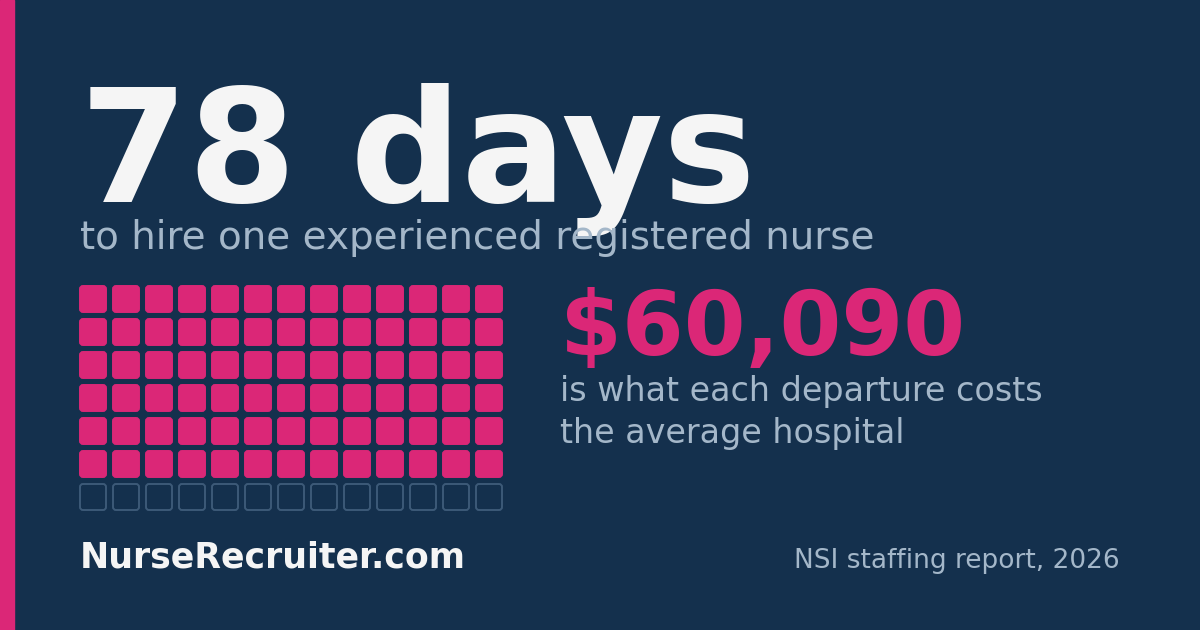
The national workforce survey found workplace violence or bullying named by 12.3% of nurses as a reason for leaving. Replacing one registered nurse costs the average hospital more than sixty thousand dollars. A unit that loses several nurses a year to an unsafe environment is spending real money on the consequences of not fixing it.
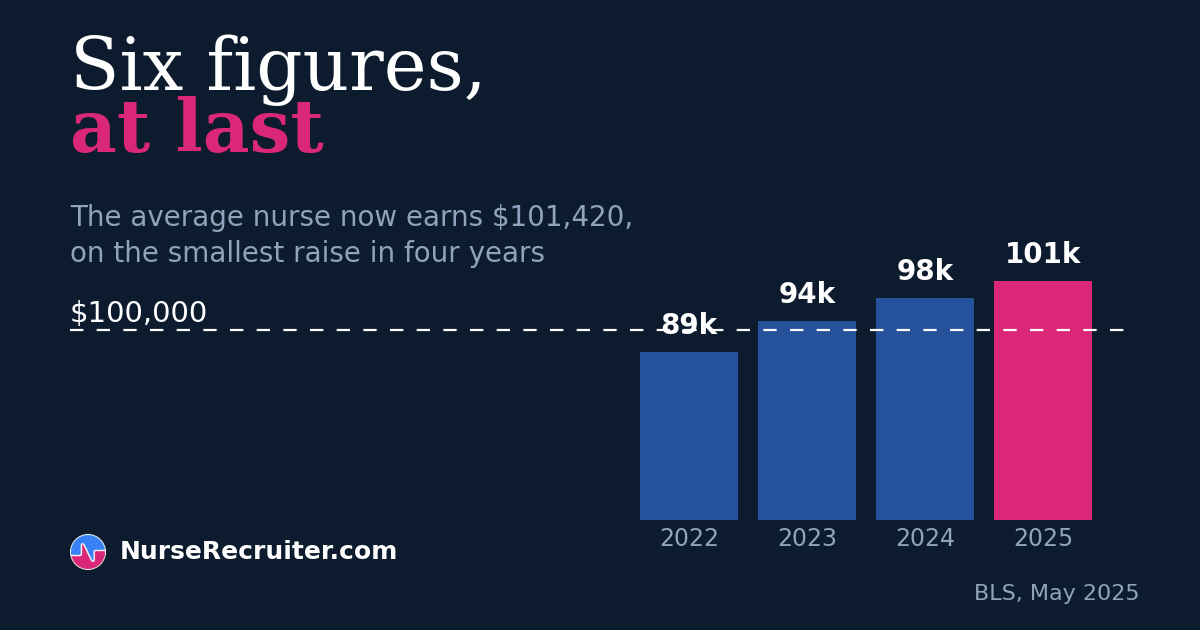
And it now affects hiring directly. Experienced nurses talk to each other, and a hospital with a reputation for leaving staff exposed acquires that reputation quickly. In a market where pay growth has slowed to about 3% and employers cannot easily outbid each other, non-wage conditions are increasingly what decides where a nurse goes.
So the practical advice for employers is unusually simple. Find out what proportion of reported incidents at your organisation resulted in a change. An actual number, not an impression. If it looks anything like the national figure, you have found something worth fixing that costs less than the turnover it is producing.
When you are ready to hire into a unit you can honestly describe as safe, say so in the posting. You can post your openings to an audience of nurses only, or search our database of more than half a million registered nurses and make the case directly.
And if you are a nurse
Report it anyway, even when it feels pointless. The aggregate record is what eventually forces change, and an incident that was never logged never happened as far as any future case is concerned.
Know your own state's law, because it may be better than your employer has told you.
And know that "this is just part of the job" is a thing people say, not a fact. Four in five nurses experiencing violence in a year is not an inevitability of caring for sick people. It is a description of how these workplaces are currently run, and the states now legislating are evidence that it can be run differently.
If your employer is in the 42.5% that changed nothing, that is information about your employer. There are thousands of nursing jobs elsewhere, and you are allowed to use them.