The average nurse now earns six figures, on the smallest raise in four years
By Diana Perez · Facebook LinkedIn Email
The new federal wage figures landed this month, and they contain a milestone and a warning, in that order.
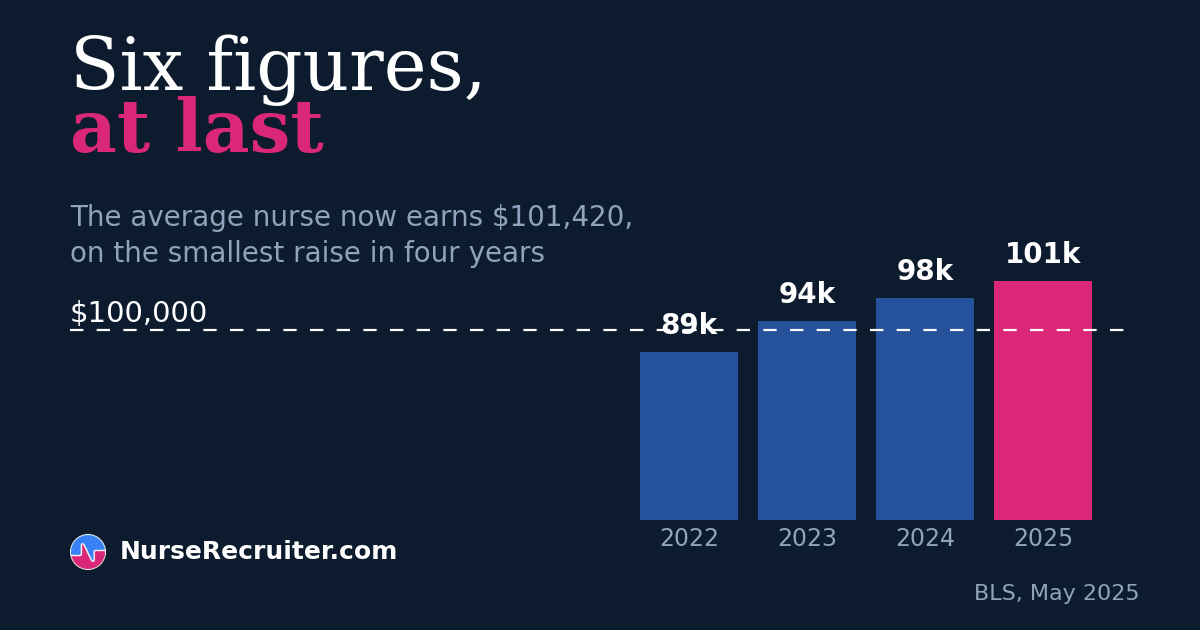
The milestone: the average registered nurse now earns $101,420 a year. Nursing has crossed six figures nationally for the first time. That is worth marking, because for most of the last decade it looked a long way off.
The warning is in the same table. That six-figure average arrived on a 3.0% raise, the smallest in four years.
The number that matters is the trend, not the milestone
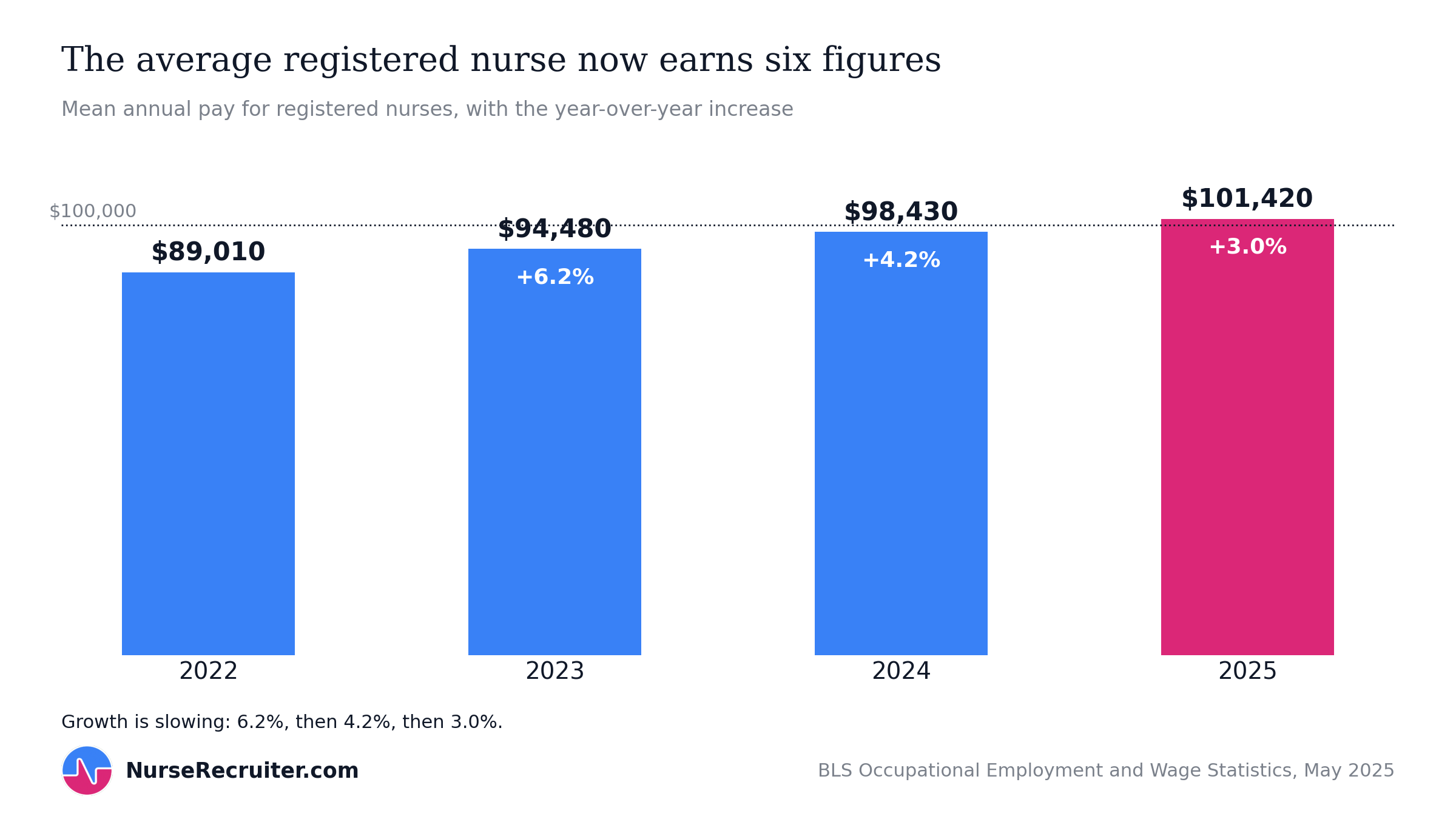
Look at the last three years of increases in order: 6.2%, then 4.2%, then 3.0%. Each year's raise is meaningfully smaller than the one before.
That is the post-pandemic correction working through nursing pay. The enormous raises of 2022 and 2023 were a labour market in crisis paying whatever it took. What we are watching now is that emergency premium being slowly withdrawn, and pay settling back toward something ordinary.
For context, the average American worker across all occupations got 2.7% over the same period. So nurses are still ahead, by three tenths of a percentage point. A year earlier that gap was much wider. Nursing pay is converging on the rest of the economy.
There are now 3,379,720 registered nurses employed in the United States, up about 97,000 on the year. The middle nurse, meaning the median, which is a better guide to a typical career than the average, earns $97,550.
The spread inside the profession is enormous
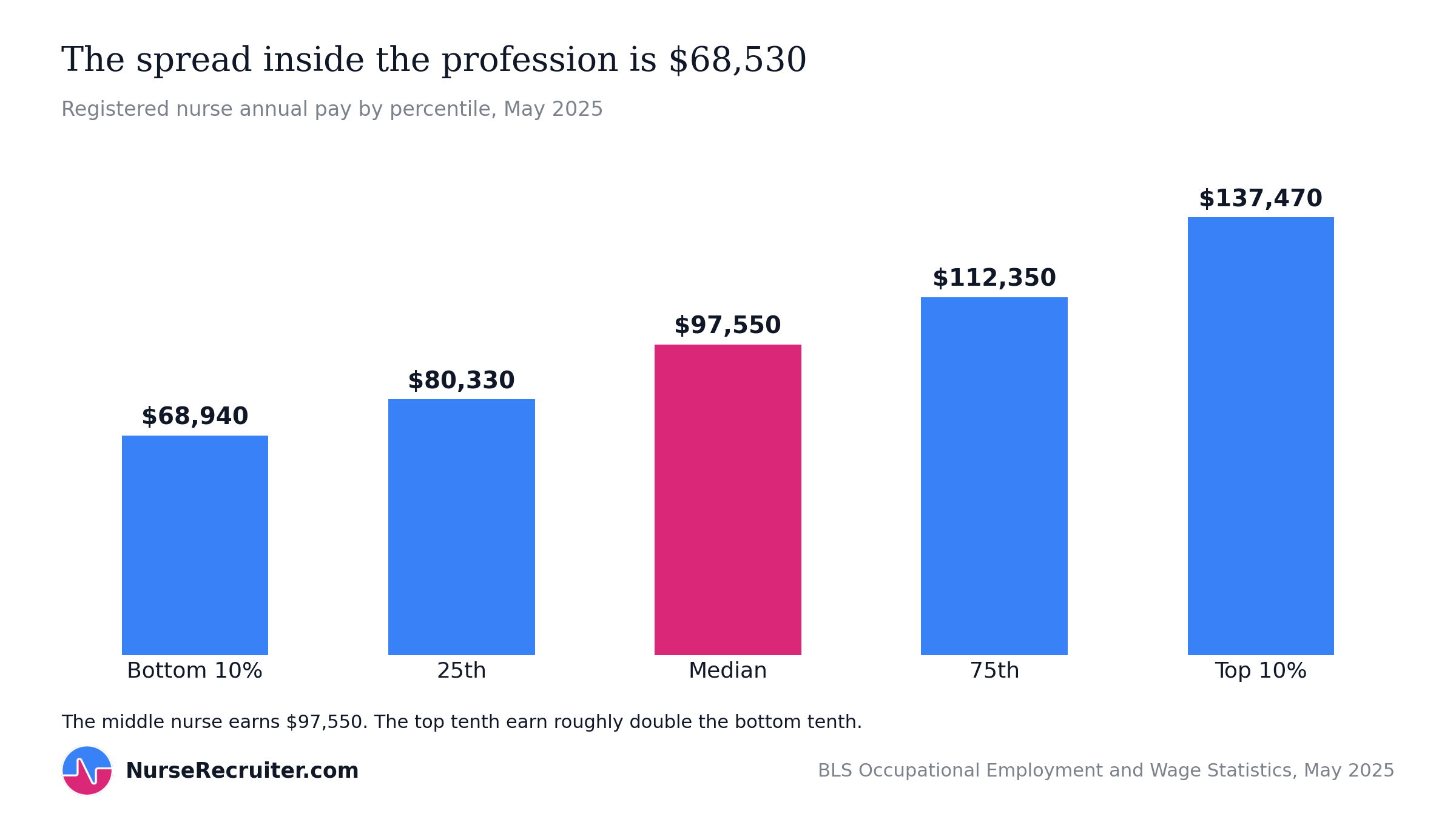
This is the chart we would put in front of any nurse wondering whether they are paid fairly.
The bottom tenth of registered nurses earn $68,940 or less. The top tenth earn $137,470 or more. That is a spread of $68,530. The best-paid decile earns roughly double the least-paid decile, doing a job with the same licence behind it.
Some of that is geography, which we broke down last year and which has not fundamentally changed. California still leads the country by a distance, at an average of $150,280. Some of it is specialty, some is setting, and some is simply seniority.
But a good deal of it is none of those, and this is the practical point. Two nurses with the same experience, in the same city, in the same kind of unit, can sit thousands of dollars apart because one of them moved employers at the right moment and the other did not. The percentile chart is the most useful thing in this release precisely because it shows how much room there is between where you might be and where the same job pays.
What a 3% year means for you
Your raise is now roughly inflation, not above it. During 2022 and 2023, staying put still produced real gains because the whole market was moving. That is over. A cost-of-living adjustment is now approximately what the market average is doing, which means it is no longer a bargain to sit still.
Moving is where the money is again. When the market is rising 6% a year, an employer has to keep pace to hold you. When it is rising 3%, the gap between what your employer pays you and what a new employer would pay to get you tends to widen, because internal raises are budgeted and external offers are competitive.
Know your percentile before your review. Not the national average, which is one number covering three and a half million people, but where you sit in the spread above, for your metro and your specialty. It is a much harder thing for a manager to wave away.
What it means if you are hiring
The good news for employers is real. You are no longer bidding in an emergency, and the years when wage expectations moved faster than budgets have ended.
The catch is that everything else got harder while pay was cooling. The 2026 strike settlements landed above the national trend, which resets expectations wherever they happened. And the workforce doing this work is older than it has ever been, with a large share saying they intend to leave within five years.
So the recruiting problem is no longer principally a pricing problem. It is a reach problem: getting in front of the right nurse before someone else does, at a moment when your headline salary is unlikely to be dramatically better than anyone else's. That is what a job board with an audience made entirely of nurses is for. You can post your openings, or skip the waiting and search our database of more than half a million registered nurses directly.
The honest caveat
Two, actually.
These figures describe May 2025, published a year later. That is simply how the federal survey works, and it means the numbers are a benchmark rather than a live quote. And the agency itself cautions against reading year-to-year differences as pure wage growth, because the survey sample and job coding shift between releases. The direction is solid; treat the decimal places as approximate.
None of which changes the headline. Nursing pays six figures on average now. It also just handed out its smallest raise since the crisis ended, and if you want more than 3% this year, the evidence says you will probably have to go and ask someone new. There are thousands of jobs on our site to ask with.