Nurse practitioner is the best job in America again, and the gap to the rest is widening
By Diana Perez · Facebook LinkedIn Email
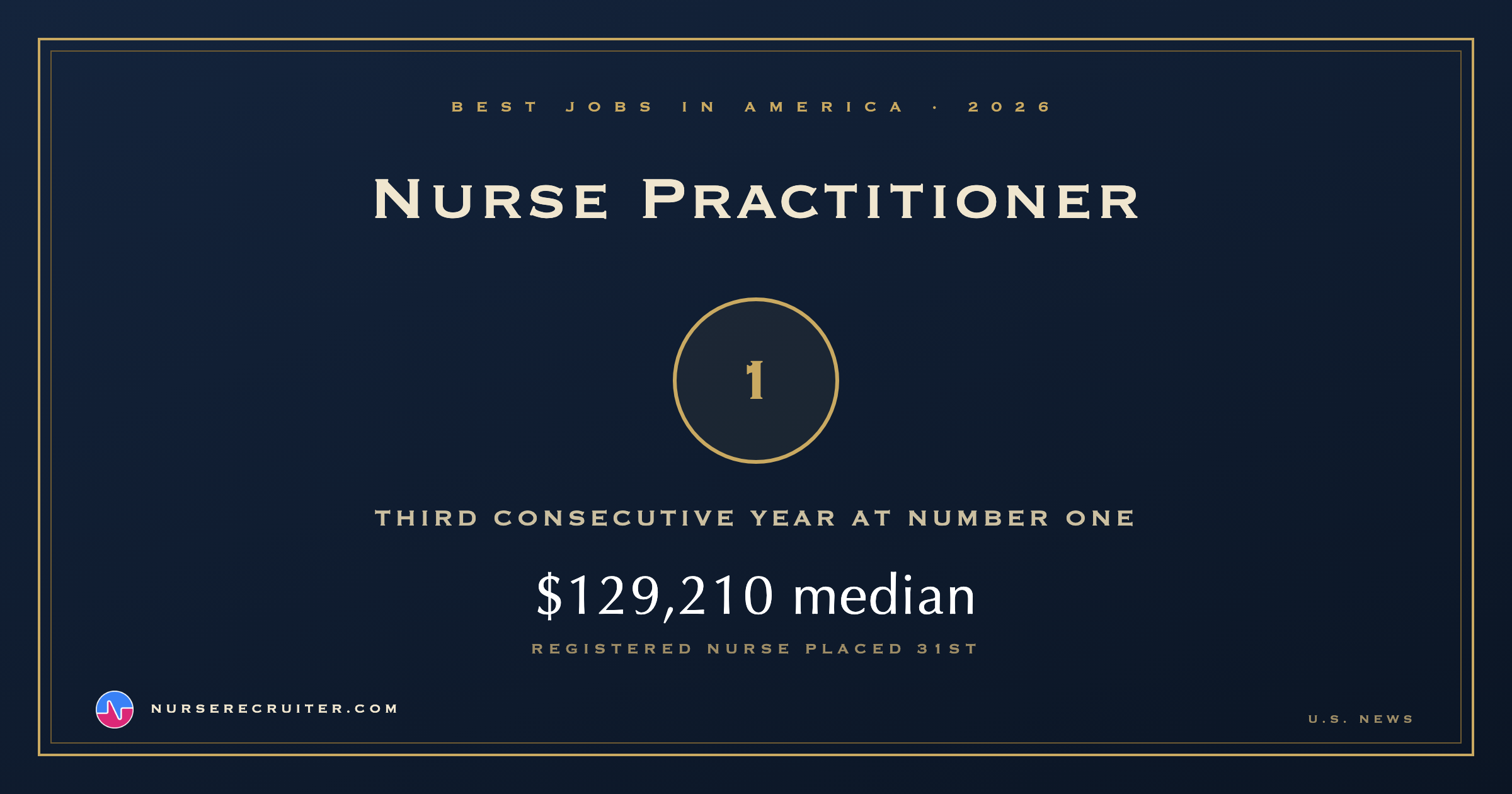
Three years in a row now. The 2026 Best Jobs rankings are out, and nurse practitioner is number one again. Not just the best health care job, but the best job in America, ahead of every software role, every engineering role, every finance role on the list. It also takes the top spot in health care and the top spot in STEM.
We asked you about this when NPs first took the crown, and the answers were more mixed than the headline. So let us do the useful version: what the ranking is actually measuring, whether it matches the job you recognise, and what it takes to get there from where you are now.
The numbers behind the trophy
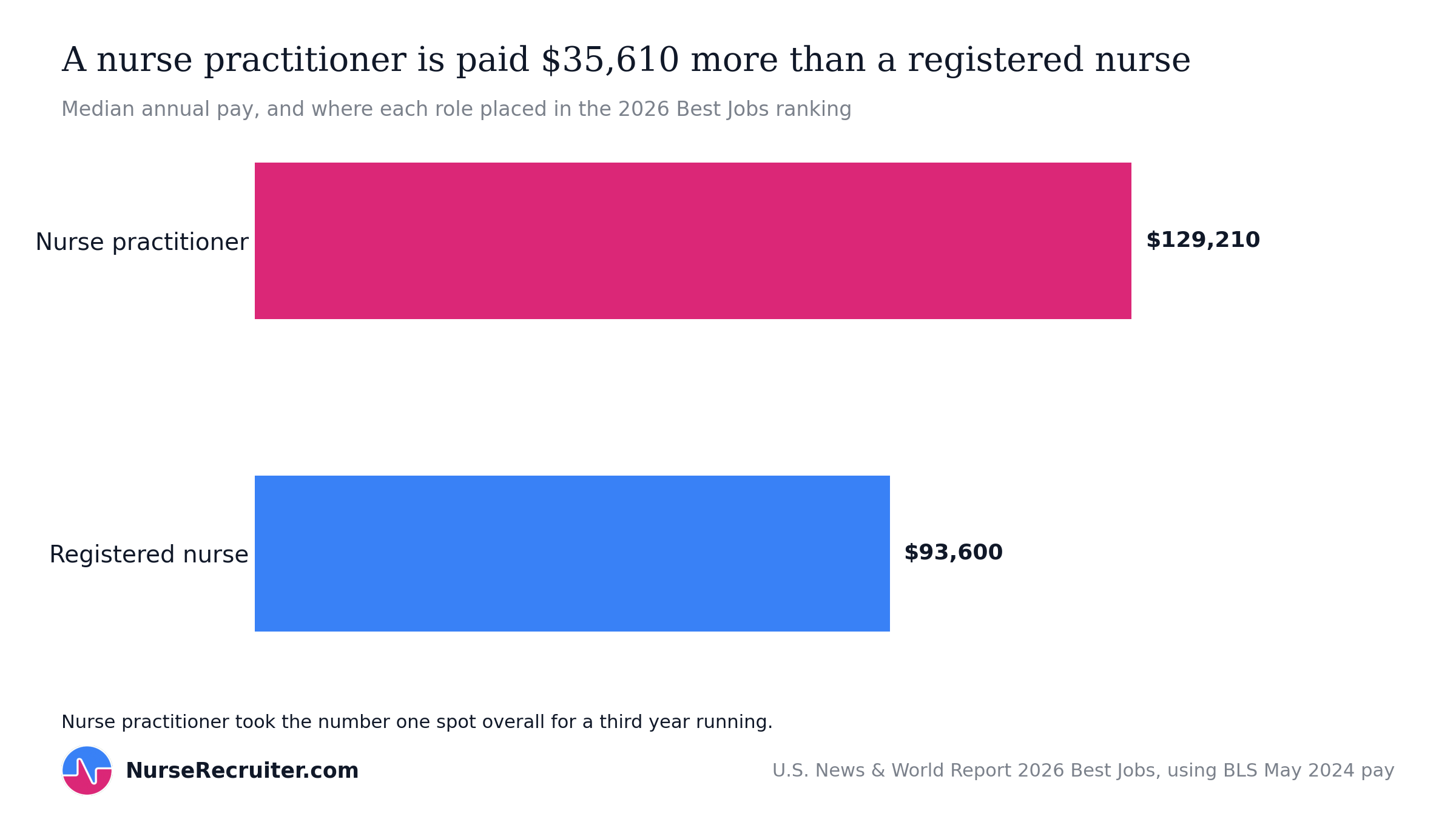
The median nurse practitioner earns $129,210. The median registered nurse earns $93,600. That is a difference of $35,610 a year, every year, for the same underlying licence plus a graduate degree.
Registered nurse placed 31st overall and 12th in health care, which is the top five percent of a hundred-job list and a genuinely strong showing that gets lost every January because it is not first. Nurse anesthetist came in 16th overall.
One thing to know before you quote these figures anywhere. The ranking uses federal wage data that is already a year old by the time it is published, so the pay above reflects May 2024. Real NP pay today is higher. We simply cannot tell you by how much until the next release, and we would rather say so than guess.
What the ranking actually rewards
It is not a popularity contest, and it is not a measure of how the job feels at 3 a.m. It scores seven things: median salary, unemployment rate, ten-year growth volume, ten-year growth percentage, future job prospects, stress level, and work-life balance.
Nurse practitioner wins because it scores well on nearly all of them at once. Very few occupations pay six figures, have a near-zero unemployment rate, and are projected to grow faster than almost anything else in the economy. Software engineering has the pay and the growth but scores worse on stress. Most health care roles have the security without the salary.
Two of those seven categories deserve a closer look, because they are where the ranking and lived experience diverge most.
Stress level is scored on the demands of the role as classified in occupational data, not on how any individual week went. An NP running a clinic single-handed on a Friday afternoon may reasonably feel the ranking has not met them.
Work-life balance is the one that most often surprises bedside nurses. A large share of NP roles are clinic-based: weekdays, daytime, no rotating nights, no weekend blocks, no being mandated to stay past a twelve-hour shift. For a nurse who has spent a decade on nights, that alone can matter more than the salary.
The honest catch
Getting there is a graduate degree, and graduate degrees cost money and years. That is the trade the ranking does not price.
The second catch is geography, and it is bigger than most people realise. What an NP is legally allowed to do without physician oversight varies enormously by state. In some states an NP can run an independent practice, assess, diagnose and prescribe on their own authority. In others every one of those things requires a collaborative agreement with a physician, which means finding one, and often paying for it.
So the same credential produces two quite different jobs depending on where you live. Before you commit to the degree, check your own state's rules, and check them again for anywhere you might move. It is the single most consequential piece of research in the whole decision, and it is the one most people skip.
What this means if you are hiring nurse practitioners
Three things follow from a number one ranking, and none of them are comfortable if you are the one recruiting.
Your candidates know what they are worth. A $129,210 median is a widely published figure now. An offer materially below it needs a reason a candidate will accept.
Unemployment in this group is close to zero. Nobody qualified is sitting at home waiting. Every NP you want to hire currently has a job, which means you are not filling a vacancy so much as persuading someone to leave somewhere else.
Your competition includes clinics, not just hospitals. The work-life balance advantage that helped win the ranking mostly belongs to outpatient employers. If you are recruiting NPs into rotating or overnight hospital coverage, you are competing against weekday clinic hours, and you will need to say what you are offering in exchange.
The practical response is the same one that works for hard-to-fill RN roles. Stop waiting for applications and go to the candidates. You can post your openings where the audience is entirely nurses, or search our database of more than half a million registered nurses and reach the ones who fit directly.
And if you are a nurse wondering whether to go back to school
The ranking is real, the pay gap is real, and the demand is real. So is the tuition, and so is the fact that your state's practice laws may cap what the credential is worth to you.
What we would say is this. A profession where the top-ranked role and a role in the top five percent both come from the same starting licence is a profession with genuine ladders in it. Not everyone wants to climb one, and staying at the bedside is not a failure to advance. But if you have been wondering whether the NP route is worth it on the numbers alone, on the numbers alone it is.
In the meantime, whatever letters you have after your name, there are thousands of nursing jobs on our site, and it costs nothing to see what your experience is worth right now.