Blog / Working Conditions / Strikes & Unions
46,000 walked out in six weeks: what the 2026 nurse strikes actually won
By Diana Perez · Facebook LinkedIn Email
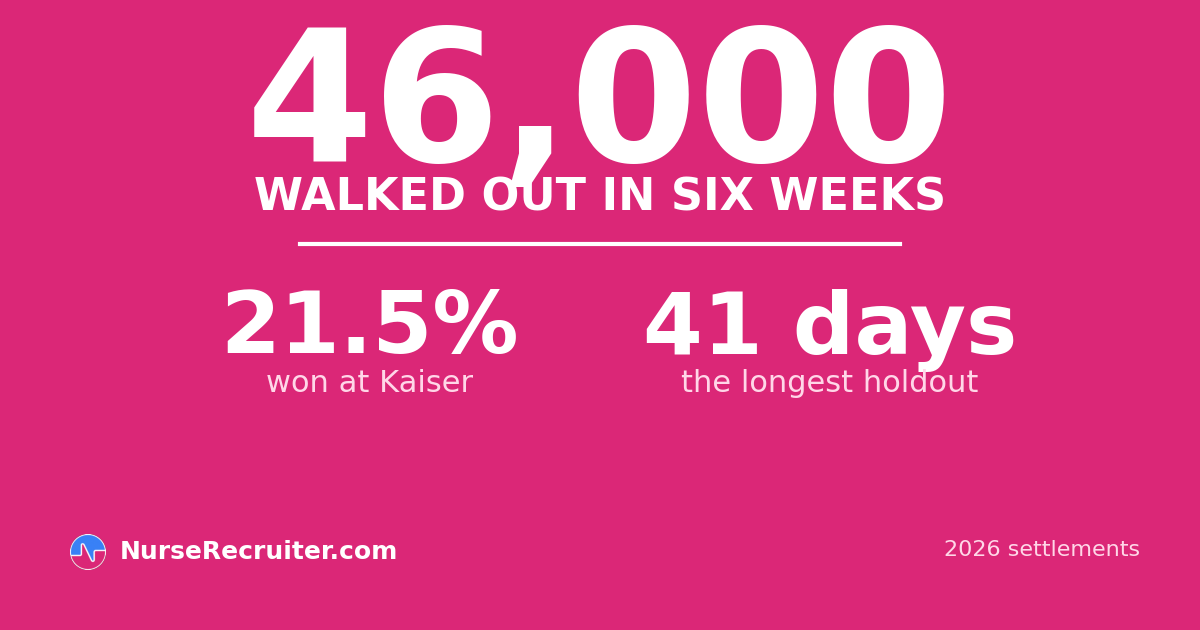
Six weeks. Two coasts. Forty-six thousand health care workers off the job.
The first quarter of 2026 has produced the largest concentration of nursing labour action since the pandemic, and unlike some earlier rounds, it ended in settlements rather than exhaustion. Here is what was won, what it cost to win it, and the one clause nobody was arguing about five years ago.
What happened
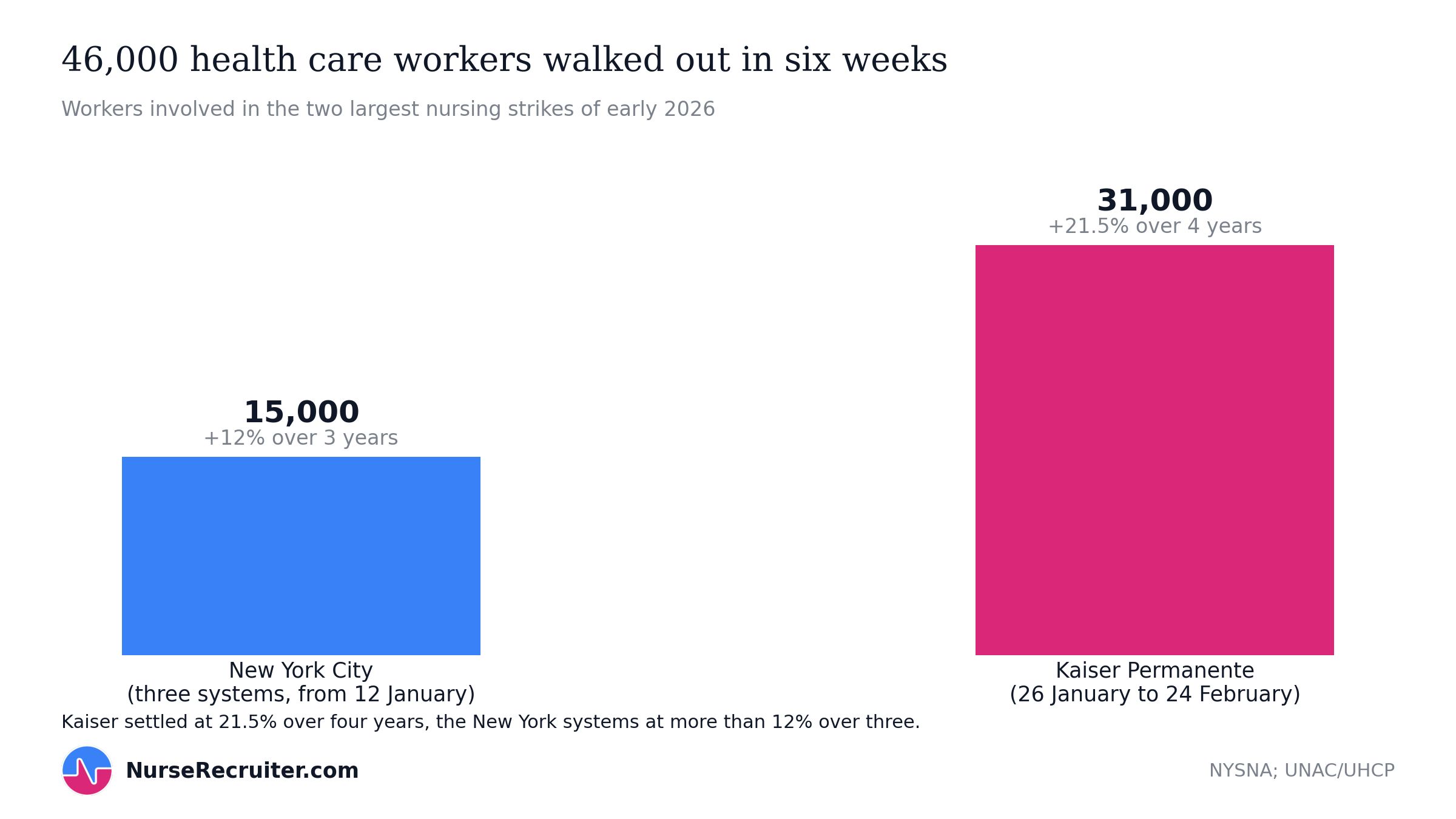
New York City, from 12 January. Around 15,000 nurses across three hospital systems walked out. Most settled within days. One employer, NewYork-Presbyterian, held out for 41 days, long enough that the strike stopped being a news event and became a test of endurance. The contracts that emerged carry raises of more than 12% over three years.
Kaiser Permanente, 26 January to 24 February. Some 31,000 workers struck across Kaiser's operations for four weeks. The settlement was 21.5% over four years, alongside patient safety provisions the unions had made central to the dispute.
Both were about staffing at least as much as pay. That has been true of nursing disputes for years now, but the framing has hardened. Unions are no longer asking for more money to tolerate short staffing. They are bargaining over the staffing itself.
The clause that is new
The New York contracts contain something that did not exist in these agreements before: limits on how artificial intelligence can be used in nursing work.
This deserves attention, because it is the first time it has been written into these contracts and it will not be the last. The concern nurses have raised is specific rather than abstract. It is not that software exists on the unit. It is about algorithms that score patient acuity and drive staffing decisions, systems that can in practice determine how many nurses a floor gets, without anyone being accountable for the judgement.
If an algorithm says a unit needs four nurses and the nurses on it say it needs six, who decides? Until this year that question was not addressed in most contracts at all. Now, in some of them, it is.
Expect this to appear in every major nursing negotiation from here.
What the raises actually mean
A 21.5% raise over four years sounds enormous, and it is a genuine win. But it is worth doing the arithmetic honestly, because "21.5%" and "21.5% a year" are very different things and the difference gets lost in headlines.
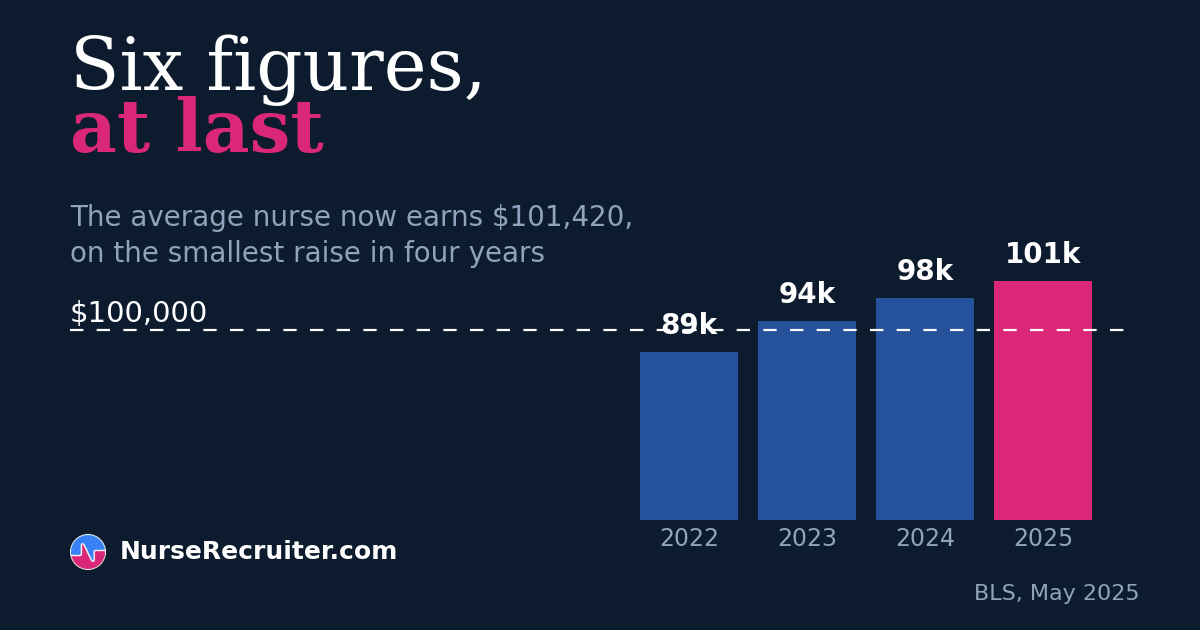
Spread over four years, that is roughly 5% a year compounding. Set against national wage data, where average RN pay rose about 4.2% in the most recent year measured, it is meaningfully ahead of the market but not a different universe from it. The New York settlements, at more than 12% over three years, land closer to the going rate.
What a strike actually buys, on this evidence, is a few points above what the market was going to deliver anyway, plus the non-wage terms, which is usually where the real fight was.
And it is bought at a cost. Forty-one days without pay is a serious financial event for a household. Any honest account of these settlements has to hold both facts. The nurses who struck won more than they would have without striking, and they paid for it out of their own pockets first.
What this means if you are hiring
Three things follow, and they apply well beyond the systems that were struck.
Settlements set the local market. Once a large system in your area settles at 21.5% over four years, that number is known to every nurse you interview. It becomes the reference point whether or not you were party to it.
Strike coverage is the most expensive staffing there is. Every day of a work stoppage is covered by agency staff at crisis rates, on top of the reputational cost and the disruption. Compared with the price of settling, a long strike is rarely the cheaper option, and the 41-day example is the demonstration.
Staffing is now a recruiting question, not just an operations one. Candidates ask about ratios, and after this quarter they will ask about acuity algorithms too. Having a real answer is worth more than a signing bonus with a vague one behind it.
The practical route to a staffing level that does not produce disputes is the same as it has always been. Hire enough people, early enough. That means reaching nurses before a vacancy becomes a crisis: post where the audience is only nurses, search the database of more than half a million registered nurses directly, or set up a Search Agent so matching candidates arrive before you need them.
If you are a nurse
We have written before about what to expect when you go on strike, and none of the practical advice has changed. Know your strike fund, know your health coverage during a stoppage, and know what your employer is legally permitted to do.
What has changed is the evidence base. Two large disputes this year both ended in settlements above the market rate. That is a fact worth having when someone tells you a stoppage never achieves anything.
It is also worth knowing what you are worth without a picket line. If your employer has not moved and you are wondering what else is out there, there are thousands of nursing jobs on our site, and looking costs nothing.