What Happens to Your Pay When the Unit Sends You Home Early?
· Pay & Benefits Facebook LinkedIn Email
Four hours into a 12-hour shift, your manager sends you home because the unit has fewer patients than expected. Before you clock out, ask how payroll will handle the remaining eight hours. Can you float to another unit? Does your hospital guarantee any pay? Can you choose whether to use paid time off (PTO)?
What happens to those eight hours?
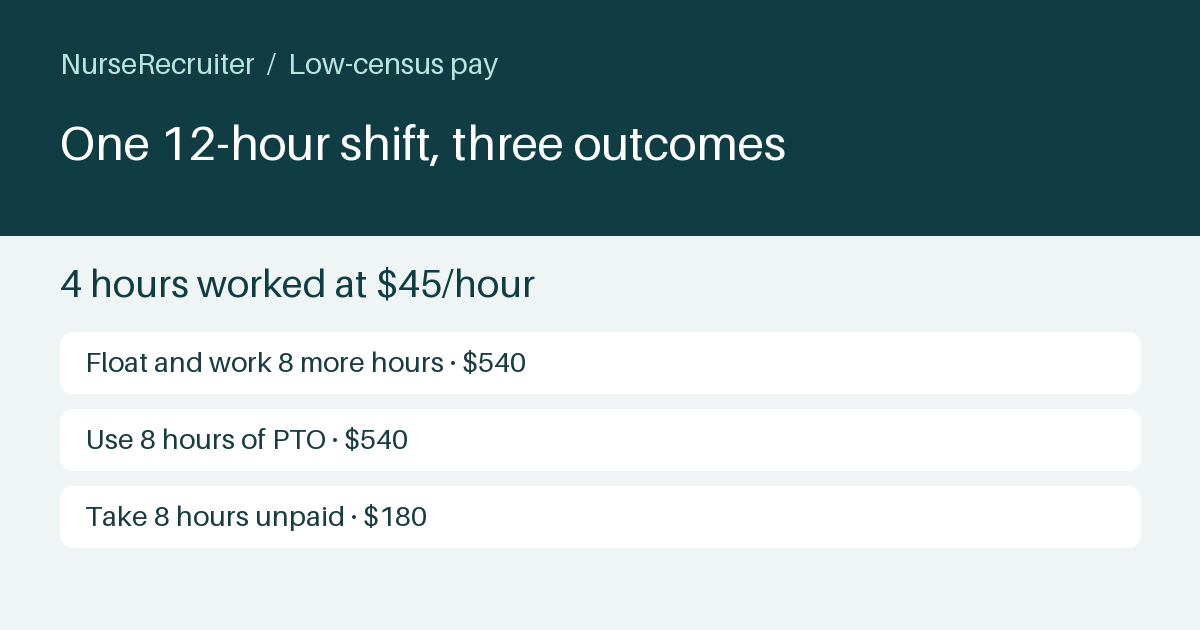
Suppose you earn $45 an hour and were scheduled for 12 paid hours. Here’s how the day adds up at base pay.
| What you do after four hours | Gross pay for the day | PTO used |
|---|---|---|
| Float and work eight more hours | $540 | None |
| Use eight hours of PTO at base rate | $540 | 8 hours |
| Take the remaining time unpaid | $180 | None |
Does the hospital guarantee a minimum?
Check your low-census policy or union agreement. For example, under section 5.14.4 of the UW Medical Center–Northwest nurses’ agreement, covered nurses who report as scheduled without advance notice of cancellation and are sent home for low census get at least four hours of work or regular pay. At $45 an hour, that’s a $180 minimum even if you’re sent home after one hour. UW Medical Center–Northwest agreement
What to check on payday
Keep the times you were notified, arrived, and clocked out. Check your pay statement for hours worked, any reporting pay, and PTO deducted. If you normally earn a night or weekend differential, check which hours received it.
If the totals look wrong, ask payroll a specific question: “I worked four hours Tuesday before the unit sent me home for low census. How were the remaining eight hours recorded, and was any PTO used?”