
Louisa May Alcott nursed for six weeks. It nearly killed her, it damaged her for the remaining twenty-five years of her life, and it produced the book that made her a writer.
Six weeks
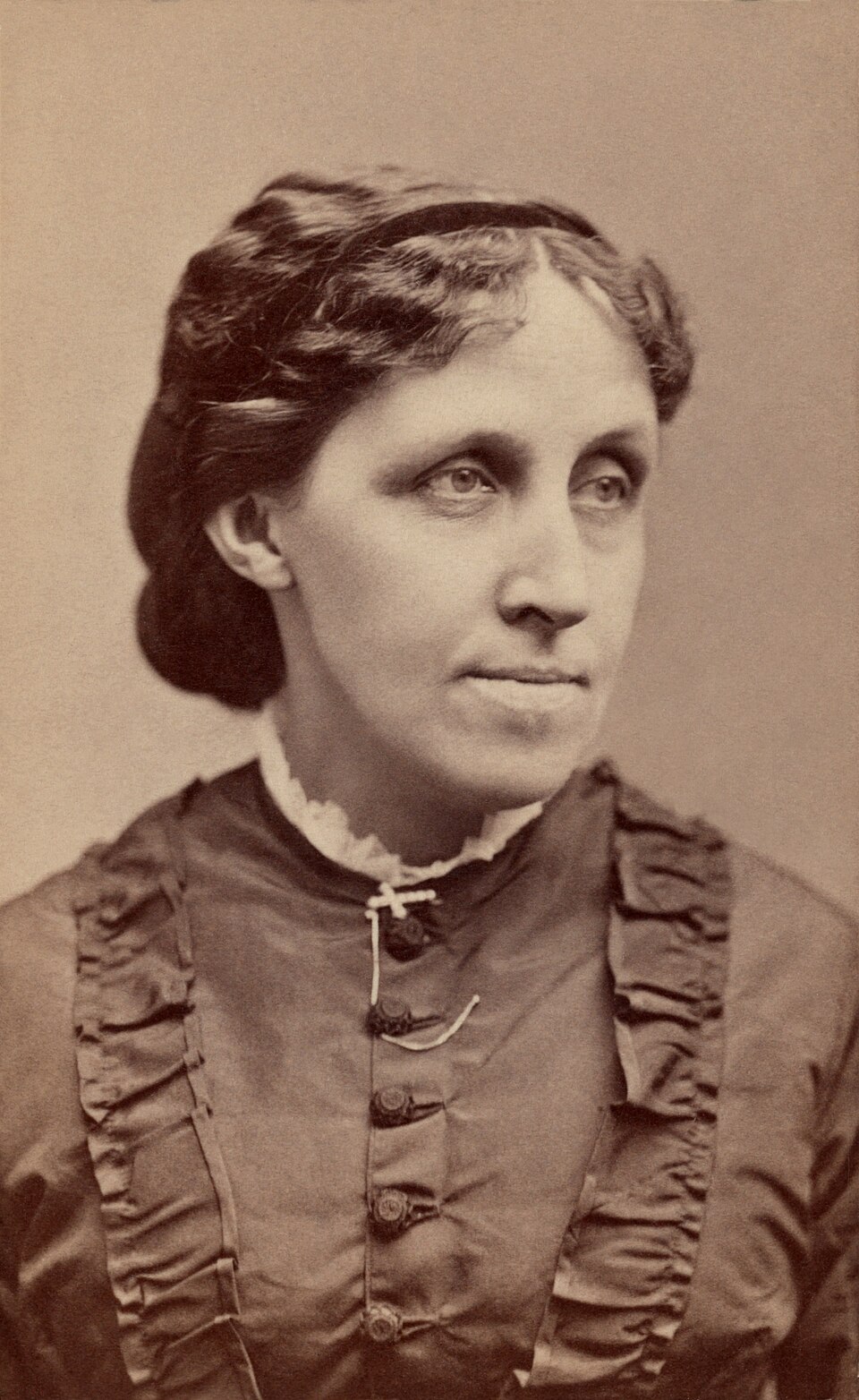
Alcott was thirty and had published very little when she volunteered as an army nurse. She reported to the Union Hotel Hospital in Georgetown on December 13, 1862 — a converted hotel, badly ventilated, with poor drainage, that even the Army considered one of the worst buildings in its service.
The wounded from Fredericksburg arrived days later.
She worked twelve-hour night shifts: dressing wounds, feeding men who could not feed themselves, writing letters home, and sitting with the dying. She had no training. Almost nobody did.
What it did to her
By mid-January she had typhoid pneumonia and could not stand.
She was treated with calomel, a mercury compound in routine use at the time, in the heavy doses then thought correct. Her father came to Washington and took her home to Concord on January 21, 1863. She had lasted about six weeks.
She never fully recovered. The vertigo, the joint pain, the headaches and the collapses she suffered for the rest of her life are generally attributed to mercury poisoning from the treatment rather than to the fever itself. She died on March 6, 1888, at fifty-five, two days after her father.
Hospital Sketches
The letters she had written home became four sketches, published in an abolitionist paper in 1863 and as Hospital Sketches the same year. It was her first real success and it is why Little Women was commissioned five years later.
It is also, with Walt Whitman's notebooks, one of the two best first-hand accounts of Civil War hospital work in American writing, and the better of the two on the specifics of the nursing.
She wrote it plainly. She described the smell, the state of the building, the shortage of everything, and a surgeon working through amputations "as if his patients were logs." She described washing a wounded man and having to hide that she was crying. The passage on the death of a Virginia blacksmith named John, whose hand she held for hours, is the part that stayed in print for a century and a half.
The book did something the sanitised memoirs of the period did not: it treated bedside nursing as work with a technique and a cost, done by an exhausted, unqualified woman doing her best in a converted hotel — which is what it was, for most of the people doing it.
Related
Sources
- Hospital Sketches, Louisa May Alcott, 1863. Project Gutenberg. Accessed September 9, 2026.
- Louisa May Alcott, Civil War nurse. National Museum of Civil War Medicine. Accessed September 9, 2026.
- Scenes from the Hurly Burly Hotel: Louisa May Alcott's Civil War. National Museum of American History, Smithsonian Institution. Accessed September 9, 2026.
- Louisa May Alcott on the hospital muster roll. Prologue, National Archives. Accessed September 9, 2026.