
Walt Whitman is remembered as a poet. He also spent three years in the military hospitals of wartime Washington, and he left behind one of the most detailed first-hand accounts of nineteenth-century bedside care in American writing.
He was not a trained nurse and never claimed to be. He described himself as "a friend visiting the Hospitals occasionally to cheer the wounded and sick." What he did there was nonetheless a real and recognizable part of nursing, and the part that is hardest to staff.
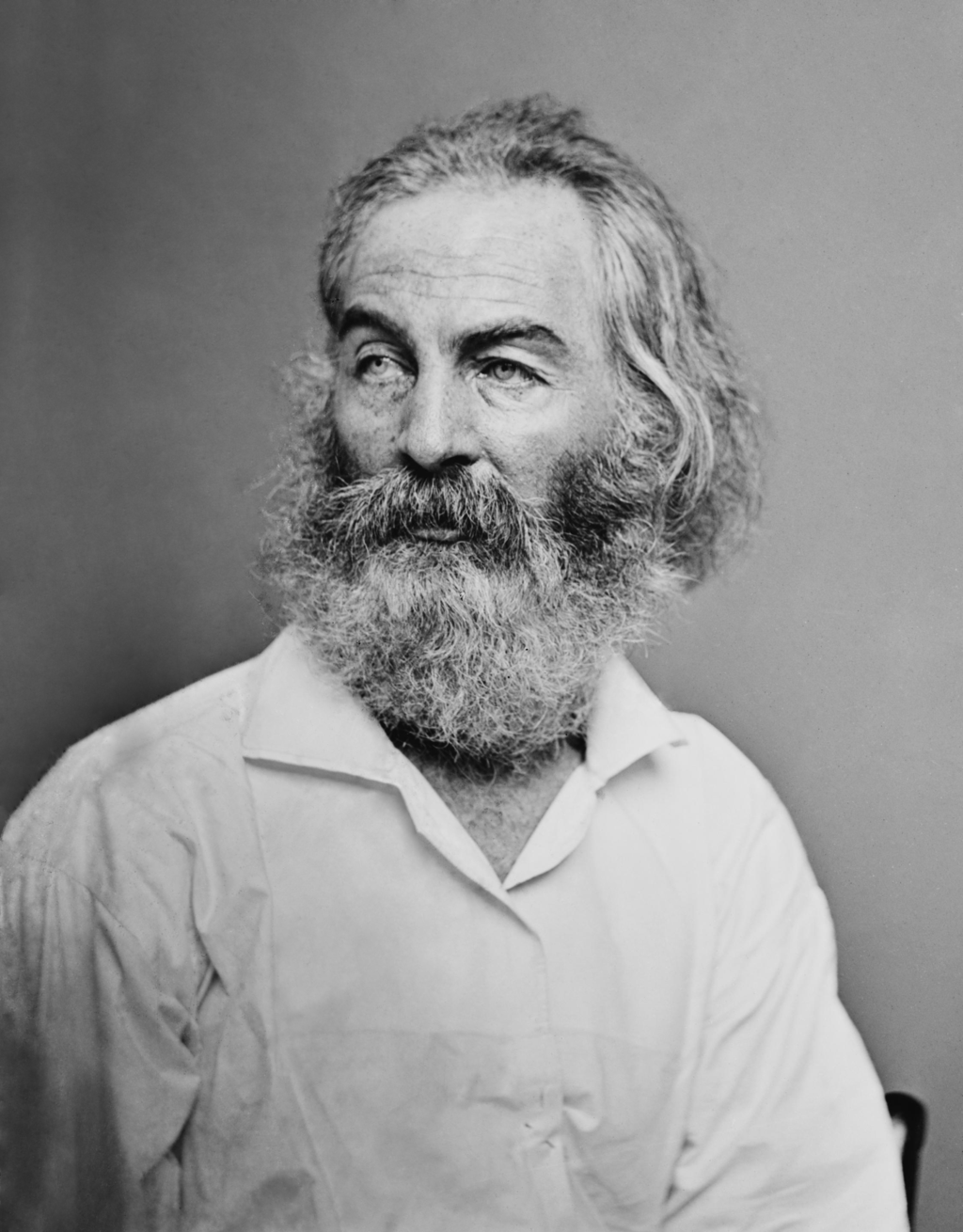 Walt Whitman. Photograph by Mathew Brady.
Looking for his brother
In December 1862 Whitman, then living in Brooklyn, saw a name close to his brother George's in a newspaper casualty list from Fredericksburg. He went south to find him.
He found George at the Union camp at Falmouth, Virginia, with a minor wound to the cheek. He also found, outside a field hospital, a heap of amputated arms and legs under a tree, and rows of men in tents with no one to sit with them. He was forty-three, out of work, and had no particular plan. He went to Washington and stayed.
Three years of rounds
Whitman spent the rest of the war visiting the city's hospitals, which had been improvised out of churches, hotels, warehouses and the Patent Office itself. He went most often to Armory Square Hospital, which took the worst cases off the trains from Virginia and had the highest death rate in the city.
Over roughly three years he made more than 600 hospital visits and reckoned he came into contact with 80,000 to 100,000 sick and wounded men, most of them teenagers or barely into their twenties.
The work was not clinical, though he dressed wounds when asked. He carried a haversack of paper, envelopes and stamps, oranges, preserves, tobacco, and small change. He wrote letters home for men who could not hold a pen, and wrote to the families of men who were dying, which meant telling parents in Ohio or Maine how their son had died and whether he had said anything. He sat with the dying. He learned names and came back.
He paid for it himself, out of a clerk's wages and out of money he solicited from friends in Brooklyn and Boston, keeping careful accounts of what he spent on whom.
What it cost him
He supported himself with part-time copying work in the army paymaster's office and, in January 1865, took a government clerkship. That June the Secretary of the Interior, James Harlan, found a marked-up copy of Leaves of Grass in his desk and fired him for it; friends placed him in the Attorney General's office within days.
His own health went first. He had been nursing men whose wounds had gone septic in the summer heat when, in June 1864, he collapsed. The illness was never diagnosed. He went home to Brooklyn and did not return to the wards until January 1865. He suffered a paralytic stroke in 1873, at fifty-three, and never fully recovered. His doctors attributed it to what they called hospital poison, absorbed during the war years, and Whitman agreed with them.
What he wrote
The hospital work produced Drum-Taps in 1865, which contains "The Wound-Dresser," the poem in which he set down what the work actually consisted of.
I am faithful, I do not give out,
The fractur'd thigh, the knee, the wound in the abdomen,
These and more I dress with impassive hand, (yet deep in my breast a fire, a burning flame.)
That parenthesis is the most exact description of professional composure anyone has written. It is also, in modern language, a description of the conditions that produce burnout.
He returned to the material in Memoranda During the War (1875) and in the hospital sections of Specimen Days (1882), which record ward conditions, supply shortages, individual patients and their outcomes with a precision that has made them a standard source for historians of Civil War medicine.
Whitman died on March 26, 1892 in Camden, New Jersey.
Related
Sources
- Traveling with the Wounded: Walt Whitman and Washington's Civil War Hospitals. The Walt Whitman Archive. Accessed September 9, 2026.
- Walt Whitman in Washington. National Museum of Civil War Medicine, on the number of visits and the nature of the work. Accessed September 9, 2026.
- Health. The Walt Whitman Archive, on his 1864 collapse and the later stroke. Accessed September 9, 2026.
- The Wound-Dresser, Walt Whitman, from Drum-Taps, 1865. Academy of American Poets. Accessed September 9, 2026.
- Civil War Nursing. The Walt Whitman Archive. Accessed September 9, 2026.
- Meeting the mother man: rediscovering Walt Whitman, writer and nurse. Accessed September 9, 2026.
- Whitman's Wartime Washington. University of Virginia. Accessed September 9, 2026.