
Dorothea Dix was not a trained nurse and never claimed to be one. She belongs here because she opened American nursing to women as paid federal service, and because the mental hospitals she founded are where a large part of American nursing was practised for the next century.
The jail in East Cambridge
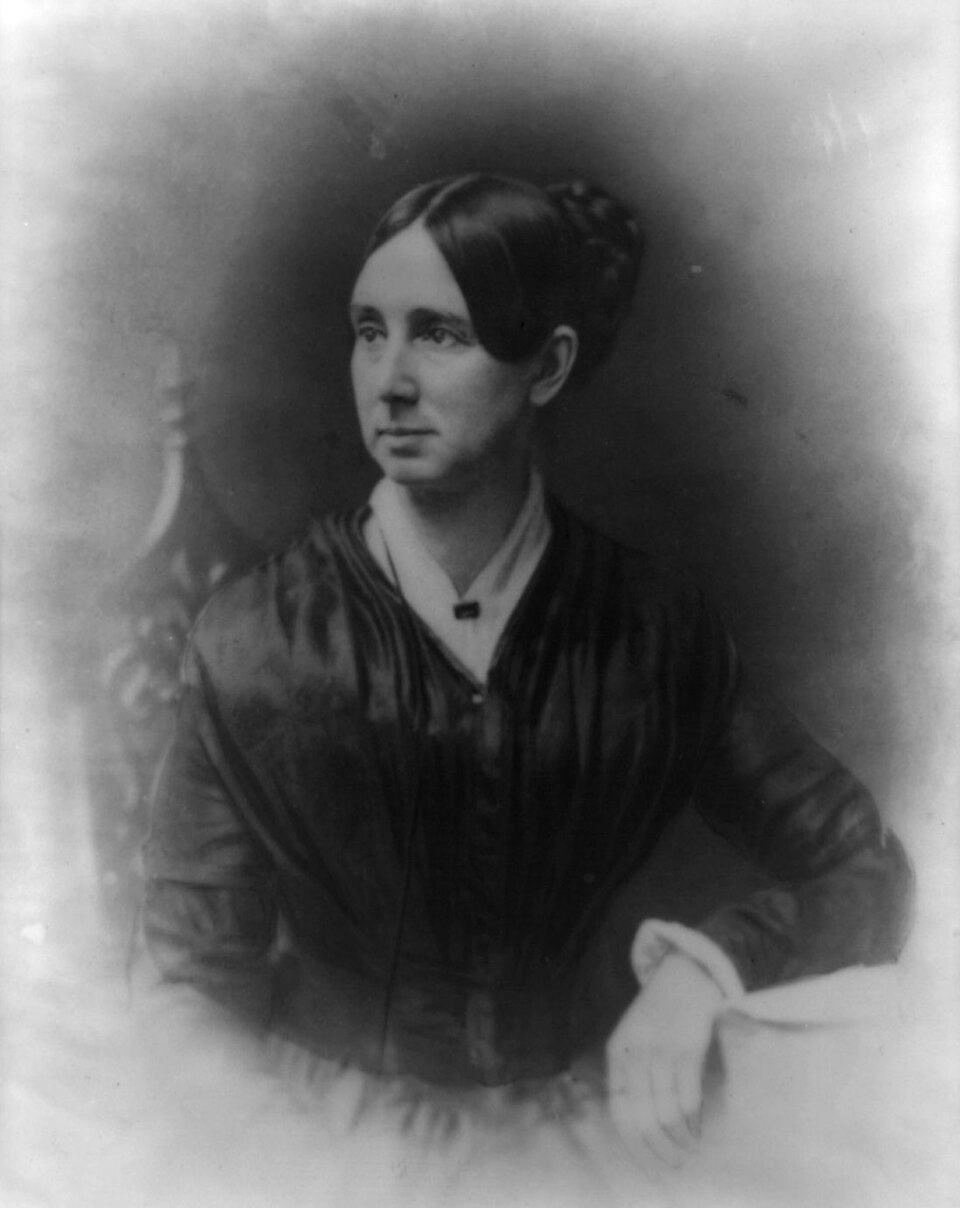
Dix was born on April 4, 1802 in Hampden, Maine, into a household she left at twelve to live with her grandmother in Boston. She taught school, wrote children's books, and had poor health for most of her life.
In 1841 she agreed to teach a Sunday school class in the East Cambridge jail and found mentally ill people held in an unheated cell in a Massachusetts winter. Told they did not feel the cold, she went to court, and won.
She then spent two years touring every jail, almshouse and workhouse in Massachusetts, keeping notes, and in 1843 laid a memorial before the legislature describing what she had found: people "confined in cages, closets, cellars, stalls, pens; chained, naked, beaten with rods, and lashed into obedience."
She did the same thing state by state for the next decade — more than 10,000 miles by stagecoach, some 500 almshouses, 300 county jails and 18 penitentiaries — and she got results. Dix founded thirty-two mental hospitals in the United States and influenced the creation of others as far away as Japan. The nineteenth-century asylum, whatever it became later, was largely her doing, and it was built as a humane alternative to the cage.
Superintendent of Army Nurses
On June 16, 1861, ten weeks into the Civil War, the Secretary of War appointed Dix Superintendent of Army Nurses. It was the first federal executive post in the United States held by a woman.
There was no precedent, no corps, and a general assumption that respectable women had no business in military hospitals. Dix's response was a set of recruitment rules designed to make her nurses impossible to attack: applicants had to be between thirty-five and fifty, plain-looking, plainly dressed, with no jewellery, no hoop skirts and no cosmetics.
The rules read as absurd now and are usually quoted for comedy. They were a calculated defence of a workforce whose reputation was the thing standing between it and dismissal, and they worked. She recruited about 3,000 women, roughly a fifth of all who served.
She was also inflexible, refused most Catholic nursing sisters, and fought constantly with army surgeons over who controlled hospital staff. In 1863 the War Department gave the surgeons authority to appoint their own nurses, which stripped most of her power. She stayed at the post anyway, unpaid throughout, until August 1865 — longer than almost anyone else who started the war in Washington.
After
Dix went back to asylum work and kept at it into her eighties. In 1881 the New Jersey State Hospital at Trenton — the first hospital she had founded — gave her a private suite for life. She died there on July 17, 1887, at 85.
Related
Sources
- Dorothea Dix, for the chronology, the asylum campaign and the army appointment. Accessed September 9, 2026.
- Dorothea Lynde Dix. National Park Service. Accessed September 9, 2026.
- Memorial to the Legislature of Massachusetts, Dorothea Dix, 1843. Accessed September 9, 2026.