
Mary Seacole was rejected by every official channel that could have sent her to the Crimean War, so she paid her own fare, went anyway, and treated British soldiers under fire out of her own pocket until she ran out of money.
Kingston
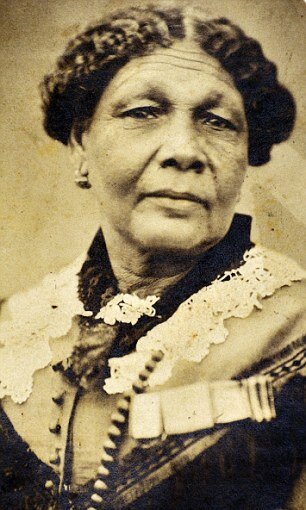
Seacole was born Mary Jane Grant in Kingston, Jamaica on November 23, 1805, to a Scottish army officer and a free Jamaican woman.
Her mother ran Blundell Hall, a boarding house that took in convalescent officers, and practised Caribbean and West African herbal medicine well enough to be known locally as the Doctress. Seacole learned the trade from her: hygiene, ventilation, warmth, hydration, rest, and a herbal pharmacopoeia.
She learned the rest in epidemics. She treated cholera in Jamaica in 1850, which killed some 32,000 people, then cholera again in Panama between 1851 and 1854, and yellow fever in Jamaica in 1853. She performed at least one post-mortem, on a cholera victim, to understand the disease better. She rejected the standard opium treatment in favour of rehydration, mustard rubs and poultices — which, on cholera, was closer to right than the orthodoxy.
By the time she was fifty she had more practical experience of epidemic disease than almost any nurse in the British Empire.
Refused
When the Crimean War broke out she came to London and applied — to the War Office, to the Quartermaster-General's department, to the Medical Department, and to the office recruiting for Florence Nightingale's party.
She was refused by all of them. She was certain it was because she was Black, and wrote so.
Did these ladies shrink from accepting my aid because my blood flowed beneath a somewhat duskier skin than theirs?
So she funded herself. She sailed in January 1855 with a business partner, Thomas Day, and in March opened the British Hotel near Balaclava — a store, canteen and dispensary built out of salvaged packing cases and driftwood.
What she actually did
The British Hotel sold food and supplies to officers, and that trade paid for the rest of it. She treated the sick free, ran a dispensary out of the building, and rode out to the battlefield with medicines, bandages and food, treating wounded men where they lay — at the Battle of the Tchernaya, at the assaults on the Redan, and after the fall of Sevastopol. Soldiers called her Mother Seacole.
The war ended faster than her stock could be sold. Seacole came home with unsellable goods and heavy debts and was declared bankrupt on November 7, 1856.
The response was public and loud. Newspapers took it up, Punch ran verses on her behalf, and a four-day benefit festival was held in her honour in July 1857 with thousands attending. She was discharged from bankruptcy in January 1857.
Afterwards
She published Wonderful Adventures of Mrs Seacole in Many Lands in July 1857 — the first autobiography published by a Black woman in Britain. She died in Paddington, London, on May 14, 1881.
Then she was forgotten for a century, and recovered from the 1980s onward. She was voted the greatest Black Briton in 2004, given Jamaica's Order of Merit posthumously in 1990, and a statue of her was raised at St Thomas' Hospital in London in 2016 — the same hospital that houses the Nightingale school.
The statue was contested. Some historians argue that Seacole was a skilled and courageous sutler and herbalist rather than a nurse in the professional sense, and that her reputation has been inflated at Nightingale's expense; others argue that the objection reproduces exactly the reasoning that kept her out in 1855. Both arguments are live. What is not in dispute is what she did in the Crimea, because the soldiers wrote it down.
Related
Sources
- Wonderful Adventures of Mrs Seacole in Many Lands, Mary Seacole, 1857. Project Gutenberg. Accessed September 9, 2026.
- Mary Seacole, for the chronology, the bankruptcy and the modern reassessment. Accessed September 9, 2026.
- Mary Seacole. National Army Museum. Accessed September 9, 2026.