
Mary Eliza Mahoney was the first Black woman in the United States to complete a professional nursing program. She graduated in 1879 from the same Boston school that had produced Linda Richards, the first trained nurse of any race in the country, six years earlier.
Fifteen years to get in the door
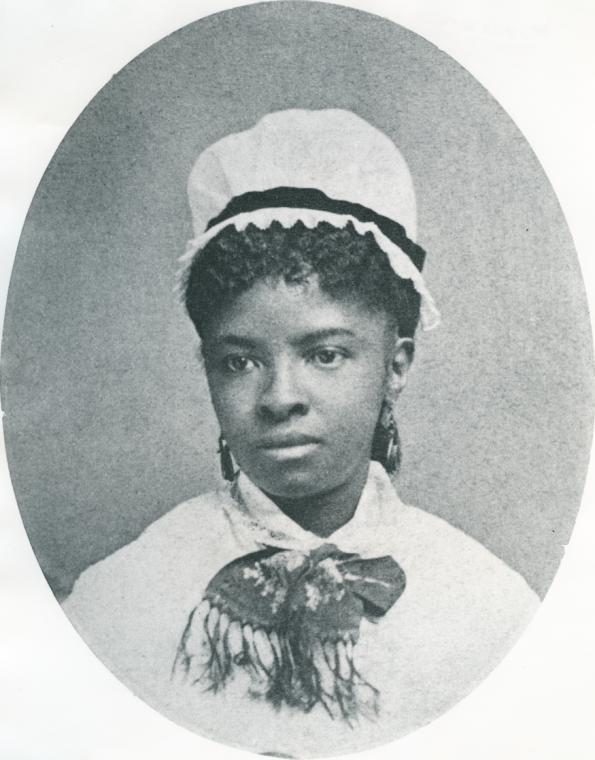
Mahoney was born on May 7, 1845 in Dorchester, Massachusetts, to parents who had left North Carolina to get out of the South.
She went to work at the New England Hospital for Women and Children at eighteen and stayed about fifteen years — as a cook, a maid and a washerwoman, often sixteen hours a day. The hospital was run by and for women and had opened the first American nurse training program in 1872. Mahoney watched it operate from the laundry for most of a decade before she was admitted to it.
One of three
She entered the sixteen-month course in 1878, at thirty-three, one of forty admitted that year. Three finished it: Mahoney and two white women. The rest were dismissed or broke under a schedule that ran from before dawn until night, with lectures on top of full ward duty.
She took her diploma in 1879.
Private duty, because hospitals would not have her
A qualified Black nurse in 1879 could not get hospital work, so Mahoney spent forty years in private duty — living in the houses of the families who hired her, mostly wealthy white families in New Jersey and along the northeast coast, specializing in mothers and newborns.
She was in demand and her reputation travelled by word of mouth between families. It is a smaller career than her training deserved, and it was the largest one available. She also directed the Howard Orphan Asylum for Black children in Kings Park, Long Island, for a year from 1911.
Building the organization
The American Nurses Association admitted Black members in principle and its state affiliates, particularly in the South, did not. In 1908 Mahoney joined Martha Minerva Franklin and Adah B. Thoms in founding the National Association of Colored Graduate Nurses, which did the work of a professional body for Black nurses for the next forty-three years.
She gave the welcome address at its first convention in 1909, served as its chaplain, and was made a lifetime member. The association's fight to open the Army Nurse Corps and the federal training programs to Black women ran on the structure she helped build. It merged into the ANA in 1951.
In 1920, at seventy-six, Mahoney was among the first women in Boston to register to vote.
She died on January 4, 1926, of breast cancer, at eighty.
Afterwards
The NACGN created the Mary Mahoney Award in 1936 for work advancing equal opportunity in nursing. The ANA still gives it, every two years, and it is the association's oldest award.
Mahoney was inducted into the American Nurses Association Hall of Fame in 1976 and the National Women's Hall of Fame in 1993.
Related
- Linda Richards
- Mabel Keaton Staupers
- History of nursing
- The Cadet Nurse Corps
- Nursing in Massachusetts
Sources
- Mary Eliza Mahoney, for the training programme, her private duty career and the NACGN. Accessed September 9, 2026.
- ANA Hall of Fame inductees. American Nurses Association. Accessed September 9, 2026.
- Mary Eliza Mahoney. National Women's Hall of Fame. Accessed September 9, 2026.
- The Dimock Center history, on the New England Hospital for Women and Children. Accessed September 9, 2026.