
A fit test and a user seal check answer different questions. A fit test assesses whether a particular tight-fitting respirator fits a particular person. A seal check helps the wearer determine whether that respirator is seated properly this time.
Passing a fit test does not remove the need to check the seal whenever the respirator is put on. Passing a seal check does not replace a required fit test.
Compare the two processes
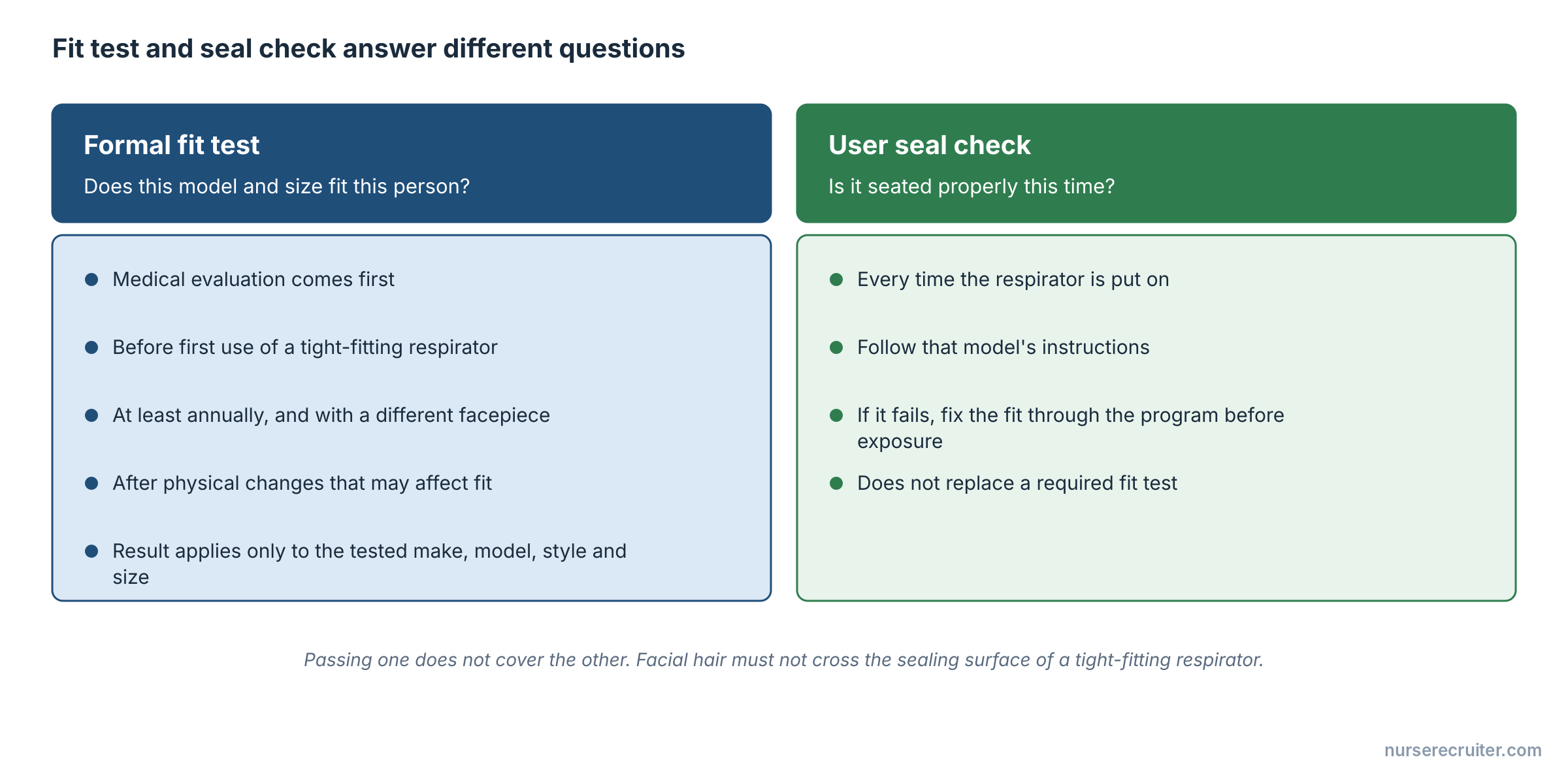
| Process | When it applies | What to keep in mind |
|---|---|---|
| Formal fit testing | Before initial use of a tight-fitting respirator, with relevant equipment changes and on the required repeat schedule | The result is tied to the tested make, model, style and size |
| User seal check | Each time an applicable respirator is donned | Follow the instructions for that specific model |
For workplaces covered by the federal rule, tight-fitting respirators require fit testing at least annually and when a different facepiece is used. Physical changes that may affect fit can also require another test. Medical evaluation precedes fit testing or required workplace use.
Know what was tested
Ask for the identifying details of the respirator associated with your result. “I passed an N95 test” is less useful than knowing the model and size supplied on the unit.
Federal rules recognize qualitative testing, which produces a pass/fail result based on the wearer's response to a test agent, and quantitative testing, which measures leakage numerically. The responsible program selects an appropriate accepted method.
Do not infer that passing on one product clears every respirator with the same protection label. If the usual supply changes, contact the respiratory protection program before relying on a substitute.
Check the seal each time
NIOSH directs users of filtering facepiece respirators to perform a seal check every time they don the device. Use the manufacturer's instructions; appropriate checks differ between designs.
If the check is unsuccessful, resolve the fit problem before exposure through the program's procedure. An improvised modification is not evidence that the respirator now provides the expected protection.
Report discomfort or fit problems that persist despite correct use. A different approved option may be needed, but selection and any required testing belong within the program.
Recognize conditions that change the result
Facial hair must not interfere with the sealing surface or valve function of a tight-fitting respirator. Other changes, including dental work, facial changes or a change in body weight that affects fit, warrant review.
The useful question is whether the particular equipment can function as required for this worker and task. Avoid treating a failed fit test as a personal failure or making an independent accommodation decision.
Keep fit-test details accessible through the employer's process, and raise discrepancies when moving to a different unit or employer. PPE instruction should make it possible to demonstrate these steps using the equipment actually supplied.
Sources
- 29 CFR 1910.134: Fit testing and facepiece seal protection (accessed 2026-09-17).
- NIOSH: Filtering facepiece respirators and user seal checks (accessed 2026-09-17).