
Lavinia Dock wrote a pharmacology textbook for nurses, co-wrote a history of nursing and campaigned for women’s suffrage.
Materia Medica for Nurses
Dock was born on February 26, 1858 in Harrisburg, Pennsylvania, and graduated from the Bellevue Hospital training school in 1886.
Four years later she published Materia Medica for Nurses, the first drug manual written for nurses. It sold more than a hundred thousand copies.
The book was an argument as much as a reference. Nurses of the period administered drugs without being taught what the drugs did, on the theory that the physician's order was the whole of the nurse's knowledge. Dock's position was that a nurse who does not understand a medication cannot recognise when it is wrong — which puts the beginning of medication safety, and of nursing pharmacology as a taught subject, in 1890.
Building the profession
She worked as night superintendent at Bellevue, ran relief nursing in the Jacksonville yellow fever epidemic of 1888 and the Johnstown flood of 1889, and went to Johns Hopkins as assistant superintendent under Isabel Hampton Robb.
With Robb she helped found the American Society of Superintendents of Training Schools in 1893, which became the National League for Nursing, and the association that became the American Nurses Association. She was a contributing editor of the American Journal of Nursing for years, and secretary of the International Council of Nurses from 1899 to 1922.
She then lived and worked at Lillian Wald's Henry Street Settlement for twenty years.
With Adelaide Nutting she wrote the four-volume A History of Nursing (1907–1912). Dock's reasoning was strategic: a profession with no documented past can be told it has no standing, and she meant to remove that argument permanently.
Arrested
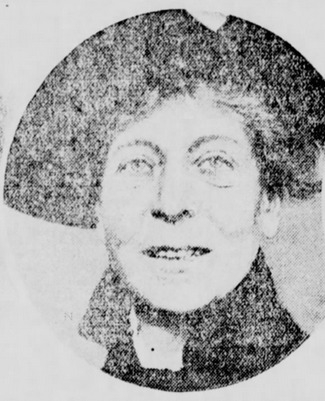
Lavinia Dock in a photograph published by the New-York Tribune in 1915. New-York Tribune, May 21, 1915. Public domain in the United States.
Dock was a socialist, a suffragist and an unusually direct writer. She campaigned for nurses to control their own registration rather than be regulated by physicians, and she wrote Hygiene and Morality in 1910 on venereal disease and prostitution — a subject nurses were not supposed to discuss in print — arguing that the women involved were victims of an economic and legal system rather than of their own character.
From 1917 she picketed the White House with Alice Paul's National Woman's Party. She was arrested repeatedly, in her late fifties and sixties, and served time in the Occoquan Workhouse.
She kept telling the nursing profession that its own subordination and women's subordination were the same problem, and that a profession which would not organize politically would keep being handed its terms.
Dock died on April 17, 1956 in Chambersburg, Pennsylvania, at 98, after a fall. She was inducted into the American Nurses Association Hall of Fame in 1976.
Related
- Adelaide Nutting
- Isabel Hampton Robb
- Lillian Wald
- Nurse practice acts and boards of nursing
- Nurse strikes and bargaining
Sources
- Lavinia Lloyd Dock, for the chronology, her publications and the suffrage arrests. Accessed September 9, 2026.
- Materia Medica for Nurses, Lavinia L. Dock, 1890. Accessed September 9, 2026.
- A History of Nursing, M. Adelaide Nutting and Lavinia L. Dock, four volumes, 1907–1912. Accessed September 9, 2026.
- ANA Hall of Fame inductees. American Nurses Association. Accessed September 9, 2026.
- Image source: Lavinia Dock 1915.png.