
Twenty-two Australian army nurses were ordered to walk into the sea off Bangka Island and machine-gunned from behind. One of them lived, spent three and a half years as a prisoner of the people who had done it, and came home to say so in court.
Rejected, then accepted
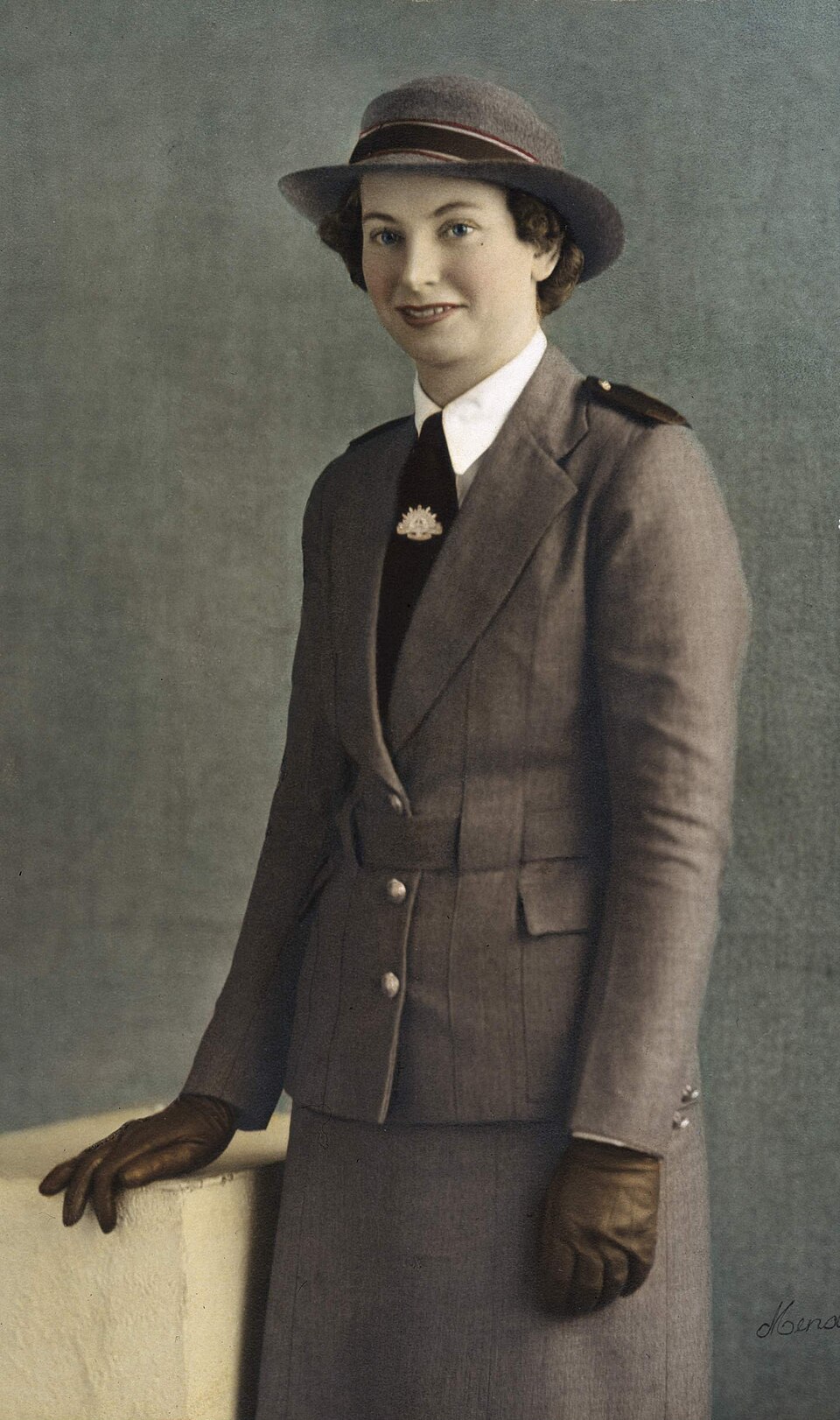
Vivian Bullwinkel was born on December 18, 1915 in Kapunda, South Australia, trained as a nurse and midwife, and volunteered for the Royal Australian Air Force in 1941. She was rejected for flat feet.
She joined the Australian Army Nursing Service instead and was posted to Singapore with the 2/13th Australian General Hospital.
The Vyner Brooke
Singapore fell in February 1942. On February 12, Bullwinkel and sixty-five other Australian nurses were evacuated aboard the SS Vyner Brooke, a small coastal steamer carrying about 250 people.
Japanese aircraft sank it two days later in the Bangka Strait. Twelve nurses died in the sinking or the water. Bullwinkel got ashore at Radji Beach on Bangka Island with twenty-one other nurses, some wounded civilians and a group of British soldiers.
There was nowhere to go. The group decided to surrender, and sent the civilian women off to find the Japanese.
16 February 1942
Japanese soldiers arrived, marched the men around a headland in two groups and killed them, then came back.
The twenty-two nurses were ordered to walk into the sea. They were shot with a machine gun from the beach, from behind, while they were wading.
Bullwinkel was hit in the back. The bullet passed through her body without striking an organ. She was carried by the waves and lay in the surf feigning death until the soldiers left.
She was twenty-six. She was the only one of the twenty-two who survived.
Twelve days, then three and a half years
She hid in the jungle for twelve days with a badly wounded British private, Cecil Kingsley, both of them being fed in secret by local villagers. Kingsley died of his wounds. Bullwinkel surrendered.
She spent three and a half years in Japanese camps in Sumatra with the surviving nurses from the Vyner Brooke. Eight of them died in captivity, of disease and starvation. Twenty-four came home.
Throughout it Bullwinkel concealed the bullet hole in her uniform, on the understanding that if her captors learned she was a witness to the massacre she would not be allowed to remain one.
Testimony
Bullwinkel gave evidence to the Tokyo war crimes tribunal in 1947.
There is good evidence she was prevented from testifying about the sexual assaults that preceded the killings — a restriction that came from the Australian side as much as anywhere, and that historians have since documented.
She stayed in nursing for the rest of her life: matron of Fairfield Hospital in Melbourne, president of the Royal College of Nursing Australia, and a member of the Australian War Memorial's council. She spent decades raising money for a memorial to the nurses who died, and unveiled it in Bangka in 1993.
She was appointed MBE in 1973 and an Officer of the Order of Australia in 1993, and died in Perth on July 3, 2000, at 84. In 2022 she became the first woman commemorated with her own statue at the Australian War Memorial.
Related
Sources
- Vivian Bullwinkel, for the chronology, the massacre and her captivity. Accessed September 9, 2026.
- Vivian Bullwinkel. Australian War Memorial. Accessed September 9, 2026.
- The Bangka Island massacre. Australian War Memorial. Accessed September 9, 2026.