
Edith Cavell built professional nursing in Belgium, then helped about two hundred Allied soldiers escape the German occupation, and was shot for it. Her last recorded words are the reason she is remembered as a nurse rather than as a martyr.
Norfolk to Brussels
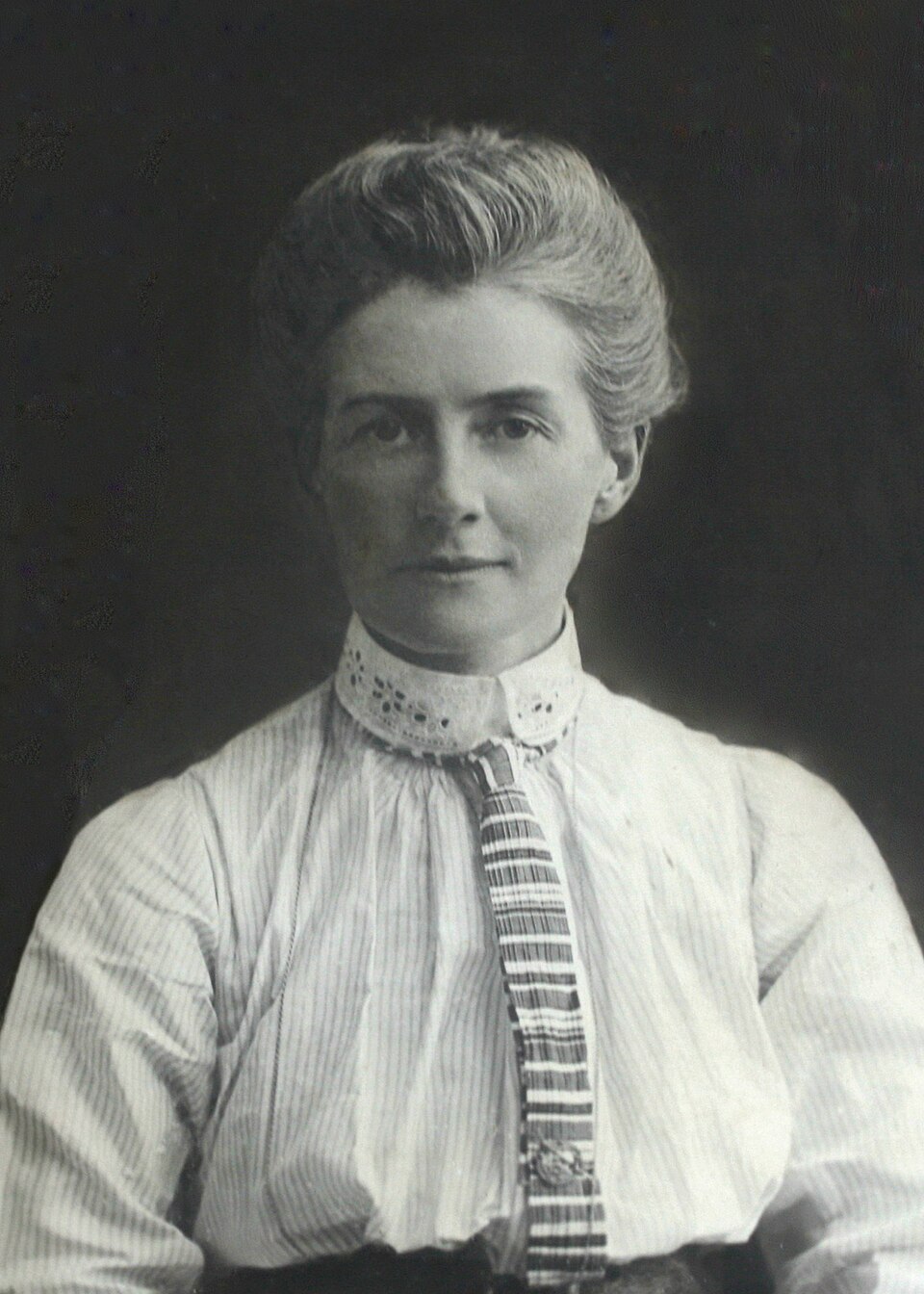
Cavell was born on December 4, 1865 in Swardeston, Norfolk, a vicar's daughter, and worked as a governess before entering nursing at thirty.
She trained at the London Hospital from 1896 under the matron Eva Luckes, worked through the Maidstone typhoid epidemic of 1897, and held posts as night superintendent at St Pancras Infirmary and assistant matron at St Leonard's.
In 1907 the surgeon Antoine Depage recruited her to run L'École Belge d'Infirmières Diplômées in Brussels. Belgium at that point had essentially no secular professional nursing; care was provided by religious orders with no standardised training.
Cavell built the profession there. By 1912 her school was supplying nurses to three hospitals, thirteen kindergartens and twenty-four schools. She launched a nursing journal, L'infirmière, in 1910. She was, in Belgium, what Isabel Hampton Robb was in the United States.
The occupation
Cavell was home in Norfolk when the war began in August 1914 and went straight back to Brussels.
Her clinic became a Red Cross hospital and she treated the wounded of both sides without distinction, which was her stated position throughout and which the Germans did not dispute at her trial.
From November 1914 she also began hiding British and French soldiers cut off behind the lines and moving them, through an underground network, to the neutral Netherlands. She admitted to helping about sixty British and fifteen French soldiers and around a hundred French and Belgian civilians of military age. The network as a whole moved perhaps two hundred people.
Under German military law this was war treason and it carried death.
Arrest and execution
She was arrested on August 5, 1915, held in Saint-Gilles prison, and confessed. There is a long-running argument about whether her confession was obtained by deception; what is clear is that she did not deny what she had done and did not implicate more of the network than she had to.
She was tried on October 7, convicted, and sentenced to death. American and Spanish diplomats tried to intervene and were refused.
The night before she died she told the English chaplain who took her communion:
Standing as I do in view of God and Eternity, I realise that patriotism is not enough. I must have no hatred or bitterness towards anyone.
That is a nurse's sentence rather than a patriot's, and it is what has kept her from being simply a propaganda figure. The British government used her death as a recruiting instrument immediately and heavily, which she would not have wanted.
She was shot by firing squad at the Tir national in Schaerbeek at seven in the morning on October 12, 1915, aged 49.
Afterwards
Her body was returned to Britain after the war. She had a memorial service at Westminster Abbey in May 1919 and was buried at Norwich Cathedral, where she remains. A memorial stands near Trafalgar Square carrying the sentence about patriotism, which was added later and over official resistance.
The nursing school she built is now the Edith Cavell Institute in Brussels.
Related
Sources
- Edith Cavell, for the chronology, the escape network, the trial and the execution. Accessed September 9, 2026.
- Edith Cavell. Imperial War Museums. Accessed September 9, 2026.
- Edith Cavell. Royal College of Nursing library and archive. Accessed September 9, 2026.