
Lillian Wald invented public health nursing, named it, and then spent forty years proving that a nurse who goes to where people live can change what happens to them more than a hospital can.
The room on Ludlow Street
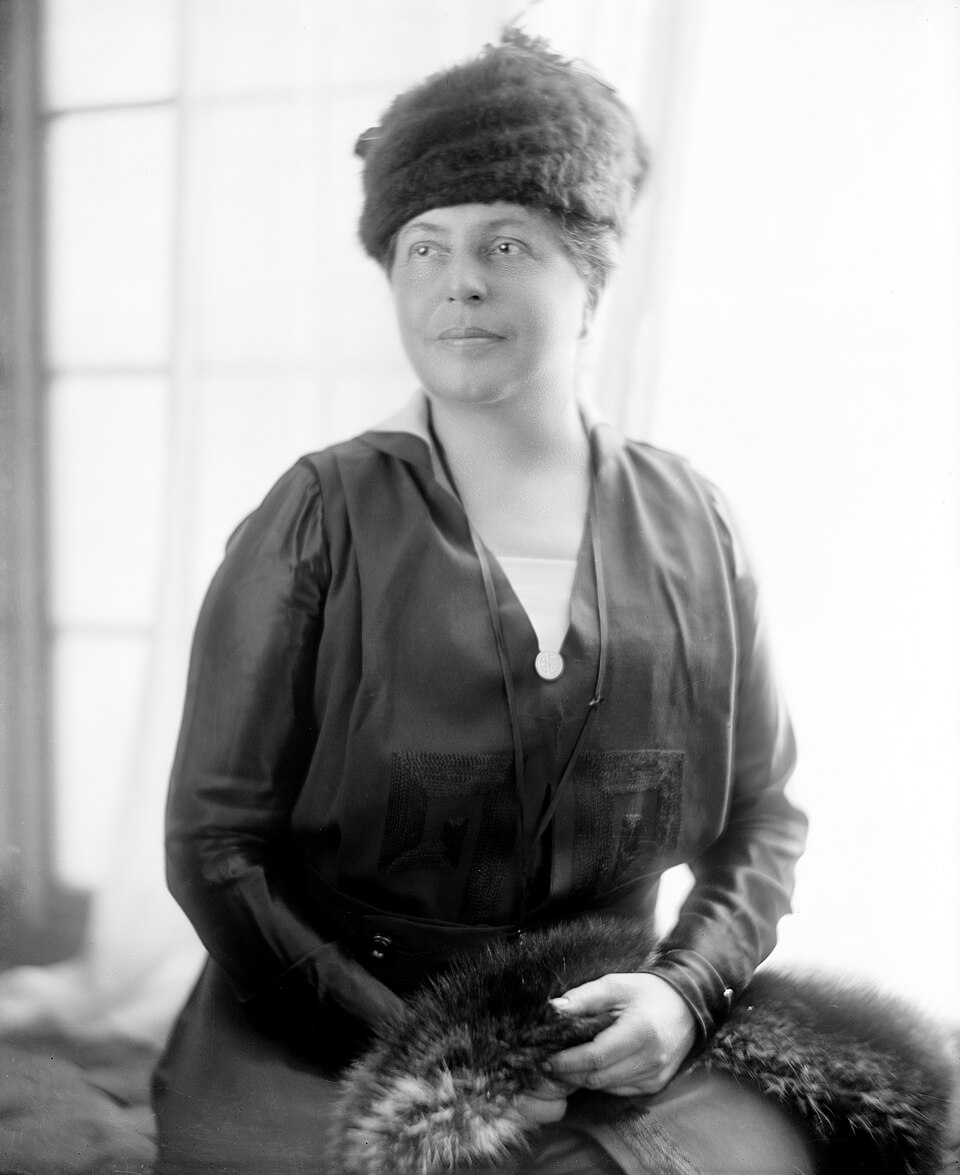
Wald was born on March 10, 1867 in Cincinnati, into a comfortable German Jewish family that moved to Rochester when she was a child. She trained at the New York Hospital School of Nursing from 1889 and graduated in 1891, then enrolled at the Woman's Medical College.
In 1893, while teaching a home nursing class for immigrant women on the Lower East Side, a child led her to a tenement room where the girl's mother lay in bed after childbirth, unattended, in filth, in a building with no running water. Wald left medical school that week.
She and a classmate, Mary Brewster, moved into the neighborhood — the point was to live there rather than visit — and began nursing whoever needed it, charging what people could pay, which was usually nothing.
The Henry Street Settlement
The operation moved to 265 Henry Street in 1895, funded by the banker Jacob Schiff, and grew into the Henry Street Settlement. Its nursing arm became the Visiting Nurse Service of New York, which was for most of the following century the largest not-for-profit home health agency in the United States.
Wald coined the term public health nurse to describe what her nurses did: work that belonged to the community rather than to a hospital or to a paying patient. By 1913 the settlement had ninety-two nurses making more than 200,000 visits a year.
She also made the argument, decades before it was fashionable, that a nurse who treats a child's trachoma and then leaves the child in the same airless room has not finished the job. The settlement ran playgrounds, clubs, classes and a theatre alongside the nursing, on the reasoning that the housing, the work and the sickness were one problem.
What she got changed
- School nursing. In 1902 Wald placed a nurse in a New York public school as an experiment, to test whether treating children on site would keep them in class instead of excluded. Absences attributed to illness fell sharply, and within months the Board of Health had hired a corps of school nurses — the first public school nursing system anywhere.
- The federal Children's Bureau. Wald and Florence Kelley proposed it in 1905 and campaigned for seven years. Congress created it in 1912.
- Child labor. She was a founder of what became the National Child Labor Committee.
- Insurance-funded home nursing. She persuaded Metropolitan Life to pay for visiting nurse care for its policyholders in 1909, on the argument that it was cheaper than the death benefit. It was, and the model spread.
- Nursing education. She pushed Columbia University to appoint the first professor of nursing at an American university.
Later
Wald opposed American entry into the First World War and helped found the organization that became the American Civil Liberties Union. The New York Times named her one of the twelve greatest living American women in 1922.
She retired from Henry Street in 1933 after a long illness and died on September 1, 1940 in Westport, Connecticut.
She was elected to the Hall of Fame for Great Americans in 1970 and the National Women's Hall of Fame in 1993.
Related
Sources
- Lillian Wald, for the chronology, the Henry Street Settlement and her honors. Accessed September 9, 2026.
- Our history. Henry Street Settlement. Accessed September 9, 2026.
- Lillian D. Wald. National Women's Hall of Fame. Accessed September 9, 2026.
- The House on Henry Street, Lillian Wald, 1915. Accessed September 9, 2026.