
Faye Glenn Abdellah was eighteen when the Hindenburg came down at Lakehurst, New Jersey, a few miles from her home. She ran to it with her brother, found people burned and dying, and could do nothing for any of them.
She said afterwards that she vowed that night never to be helpless again, and went into nursing. She finished as the first nurse and the first woman to serve as Deputy Surgeon General of the United States.
Training and the 21 problems
Abdellah was born on March 13, 1919 in New York City. She graduated from the Fitkin Memorial Hospital School of Nursing in New Jersey in 1942 and took bachelor's, master's and doctoral degrees at Teachers College, Columbia.
In the 1950s she did the work she is cited for in textbooks. Nursing at the time was taught and documented around the patient's medical diagnosis: the curriculum followed disease categories and the nurse's record followed the physician's.
Abdellah's Patient-Centered Approaches to Nursing (1960) replaced that with a typology of twenty-one nursing problems — grouped into physical needs, sociological and emotional needs, the nurse–patient relationship, and the elements of care — organized around what the patient needs rather than what the disease is called.
That reorientation is the direct ancestor of nursing diagnosis and of the patient-centred structure of the nursing process. She was also an early and forceful advocate for nursing research as a discipline with its own funding.
The Public Health Service
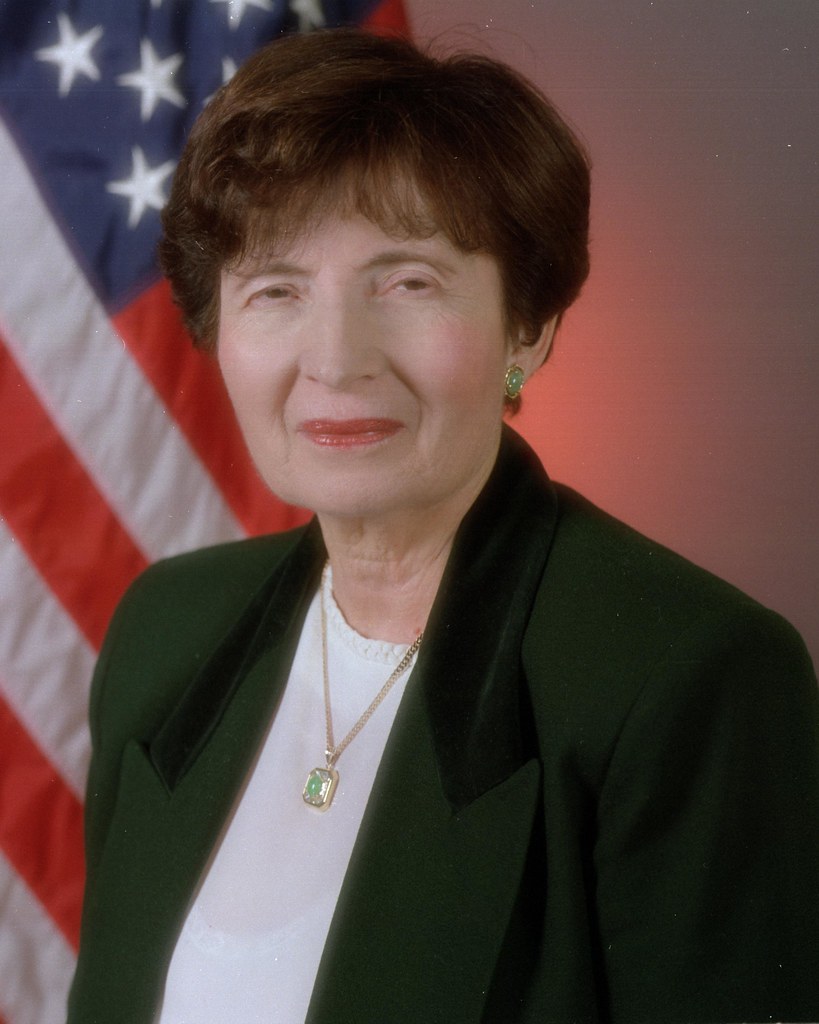
Abdellah joined the Commissioned Corps of the United States Public Health Service and served on active duty through the Korean War period.
She rose through it for four decades. She became Chief Nurse Officer of the Public Health Service, and was promoted to rear admiral — the first nurse to hold flag rank in the federal service, and at the time the highest position any woman had held in federal nursing.
In 1981 the Surgeon General, C. Everett Koop, appointed her Deputy Surgeon General. She was the first nurse and the first woman in the post and held it until 1989.
What she used it for
- Nursing homes. Her early field research documented conditions in American long-term care and fed directly into the federal standards that followed. See nursing home staffing requirements.
- The National Institute of Nursing Research. Abdellah was central to getting nursing research established at the National Institutes of Health, which put nursing science on the same footing as the other health disciplines and is the thing Martha Rogers had been arguing for from the academic side.
- AIDS. She was among the first senior federal health officials to press for a coordinated response, and worked on the Surgeon General's public education campaign.
- Federal nursing education. She founded the graduate nursing school at the Uniformed Services University of the Health Sciences and was its first dean, at seventy-three.
Abdellah published more than 150 works, was named a Living Legend of the American Academy of Nursing in 1994, entered the National Women's Hall of Fame in 2000 and the American Nurses Association Hall of Fame in 2012.
She died on February 24, 2017, at 97.
Related
- The nursing process
- Nursing diagnosis and standardized language
- Nursing home staffing requirements
- Martha Rogers
- Nursing theory
Sources
- Faye Glenn Abdellah, for the chronology, the Hindenburg account and her federal appointments. Accessed September 9, 2026.
- Patient-Centered Approaches to Nursing, Faye G. Abdellah and others, 1960. Accessed September 9, 2026.
- Faye Glenn Abdellah. National Women's Hall of Fame. Accessed September 9, 2026.
- ANA Hall of Fame inductees. American Nurses Association. Accessed September 9, 2026.