
Ethel Gordon Fenwick spent thirty years arguing that nursing should be a legally registered profession with an examinable standard. Her most formidable opponent was Florence Nightingale. Fenwick won, and every licensing board in the English-speaking world descends from the argument.
Matron at twenty-four
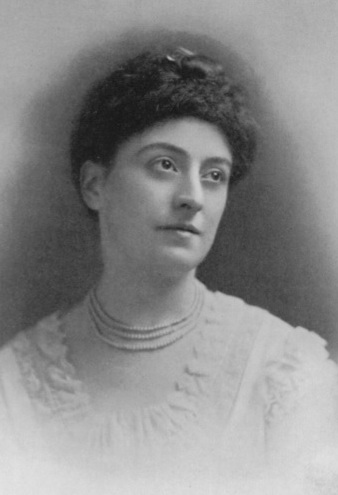
She was born Ethel Gordon Manson on January 26, 1857 in Elgin, Scotland. She trained at the Children's Hospital in Nottingham and the Royal Infirmary in Manchester, and in 1881, at twenty-four, was appointed matron of St Bartholomew's Hospital in London — one of the largest hospitals in the country.
She resigned in 1887 on marrying Dr Bedford Fenwick, as the rules of the time required, and spent the next sixty years as a campaigner instead.
The registration fight
Anyone in Britain in 1887 could call herself a nurse. There was no examination, no register, no minimum training and no way for a patient or an employer to tell a three-year-trained hospital nurse from someone who had answered an advertisement.
Fenwick founded the British Nurses' Association that year to change it, on a simple proposition: a legal register, a required standard of training, and an examination — nursing controlling its own entry the way medicine did.
Nightingale opposed her, and the opposition was serious rather than merely obstructive. Nightingale's view was that the qualities that made a good nurse were character and disposition, that these could not be examined, and that a certificate would let unsuitable people acquire a permanent claim to a title. She also distrusted anything that looked like a trade union of nurses. Doctors and hospital managers opposed registration too, for less elevated reasons: a registered profession could set its own terms.
The fight ran for three decades. Fenwick edited the British Journal of Nursing for fifty-four years and used it relentlessly, and by 1910 had assembled most of the nursing organizations behind her.
The Nurses Registration Acts of 1919 passed after the First World War, in which the absence of any standard had become impossible to defend. The register opened in 1923. Fenwick is State Registered Nurse Number One.
Every subsequent registration regime, including American nurse practice acts and boards of nursing and the licensing examinations behind the NCLEX, rests on the principle she established: that the public is entitled to know that a person calling herself a nurse has met a standard, and that nursing decides what the standard is.
History has been kinder to Fenwick than to Nightingale on this. Nightingale was right that character matters and wrong that it was an argument against a register.
The International Council of Nurses
In 1899 Fenwick founded the International Council of Nurses and became its first president. It was the first international professional organization for women anywhere, and it still operates — Lavinia Dock was its secretary for twenty-three years.
She also founded the British College of Nurses in 1927 with her own endowment.
Fenwick died on March 13, 1947, aged 90, twenty-four years after the register she had spent her life on finally opened.
Related
- Florence Nightingale
- Lavinia Dock
- Nurse practice acts and boards of nursing
- The NCLEX
- Licensure by endorsement
Sources
- Ethel Gordon Fenwick, for the chronology, the registration campaign and the ICN. Accessed September 9, 2026.
- Nurses Registration Act 1919. United Kingdom. Accessed September 9, 2026.
- Our history. International Council of Nurses. Accessed September 9, 2026.
- Ethel Gordon Fenwick. Royal College of Nursing library and archive. Accessed September 9, 2026.