
Julia Stimson ran American Army nursing through the First World War and then won its nurses the thing they had never had: rank.
Training
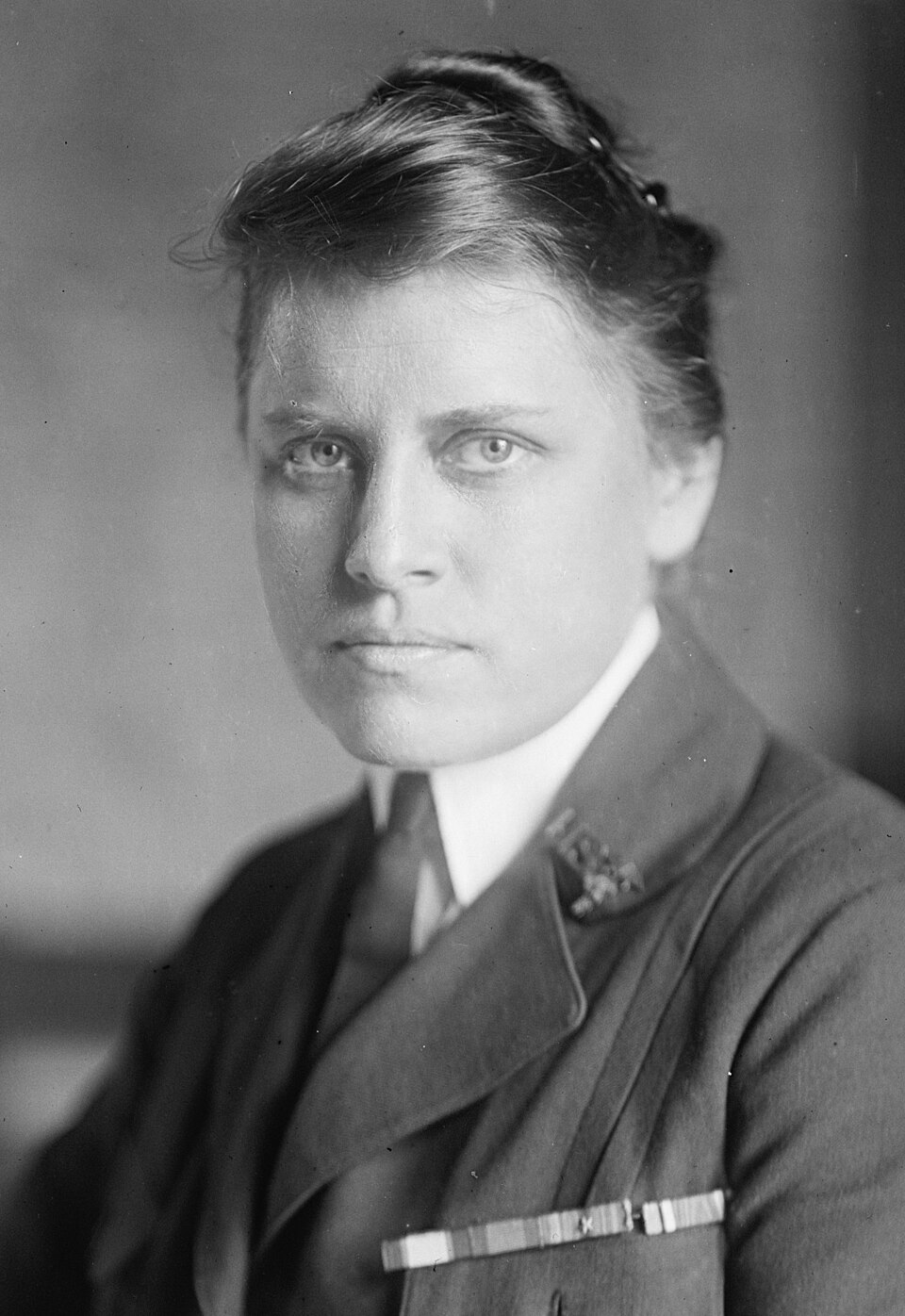
Stimson was born on May 26, 1881 in Worcester, Massachusetts, into an accomplished family — a cousin was Henry Stimson, twice Secretary of War.
She took a degree at Vassar in 1901, went into nursing against her family's preference, and graduated from the New York Hospital Training School in 1908. She ran the social service department at Washington University Hospital in St Louis, became superintendent of nurses at Barnes Hospital, and took a master's in sociology in 1917.
France
She volunteered in April 1917, days after the American declaration of war, and went to France as chief nurse of Base Hospital No. 21, a St Louis unit attached to the British Army at Rouen.
By 1918 she was chief nurse of the American Red Cross in France, then director of nursing for the American Expeditionary Forces — responsible for around 10,000 nurses across the theatre.
General Pershing awarded her the Distinguished Service Medal. Britain gave her the Royal Red Cross. In 1929 she received the Florence Nightingale Medal.
Rank
Stimson became Superintendent of the Army Nurse Corps in 1919 and dean of the Army School of Nursing.
American military nurses at that point had no rank of any kind. They were neither officers nor enlisted, which sounds procedural and was not: it meant a nurse had no authority over an orderly, no protection under the laws of war if captured, no standing in a hospital's command structure, and no pension.
Stimson campaigned for it, and in 1920 Congress granted Army nurses relative rank — the titles and insignia of officers, though not the full pay or the full authority. It was a compromise and it was the first status American military nurses had ever held. Full commissioned rank followed in 1944 and permanent commissioned status in 1947.
As Superintendent, Stimson held the relative rank of major, making her the first woman to hold that rank in the United States Army.
Afterwards
She retired in 1937, was president of the American Nurses Association from 1938 to 1944, and came out of retirement in the Second World War to recruit nurses.
In 1948 Congress authorised her promotion to colonel on the retired list. She died on September 30, 1948, weeks later, at 67. She was inducted into the American Nurses Association Hall of Fame in 1976.
Related
Sources
- Julia Catherine Stimson, for the chronology, her wartime posts and the rank question. Accessed September 9, 2026.
- Army Nurse Corps history. Army Medical Department Office of Medical History. Accessed September 9, 2026.
- ANA Hall of Fame inductees. American Nurses Association. Accessed September 9, 2026.