
Elizabeth Kenny was an Australian bush nurse with no formal training who spent twenty years telling the medical profession that the standard treatment for polio was crippling children, and eventually won.
Bush nurse
Kenny was born on September 20, 1880 in Warialda, New South Wales. She had no nursing qualification of any kind — she learned by working, in the Queensland bush, where she rode out to farms nobody else reached. The title "Sister" came later, from her service on hospital transport ships in the First World War, where it was the rank for a senior nurse.
Around 1911 she was called to a child with a condition she had never seen, whose limbs were painfully contracted. With no doctor available and no instructions beyond a telegram, she applied hot cloths and then gently moved the limbs. The child recovered without deformity. So did the five others she treated the same way.
The disease was poliomyelitis.
Against the plaster
Orthodox treatment for polio was immobilization: splints, plaster casts, braces, sometimes for months, on the theory that the affected muscles must be rested and protected.
Kenny's observation was that the problem was not weakness needing rest. It was what she called spasm — muscles in painful contraction — with the opposing muscles losing their connection to the brain from disuse. Her treatment was heat, then passive movement, then re-teaching the patient to use the limb. Immobilizing it, on her account, guaranteed the wasting and deformity the casts were meant to prevent.
She was, in outline, right, and she is a founder of what became physical therapy and rehabilitation medicine.
She was also an untrained woman contradicting orthopaedic surgeons, and they responded accordingly. A Queensland royal commission reported in 1938 that "the abandonment of immobilization is a grievous error and fraught with grave danger." Her explanations of why her method worked were sometimes wrong in their physiology even when the treatment worked, which gave her opponents something real to attack.
America
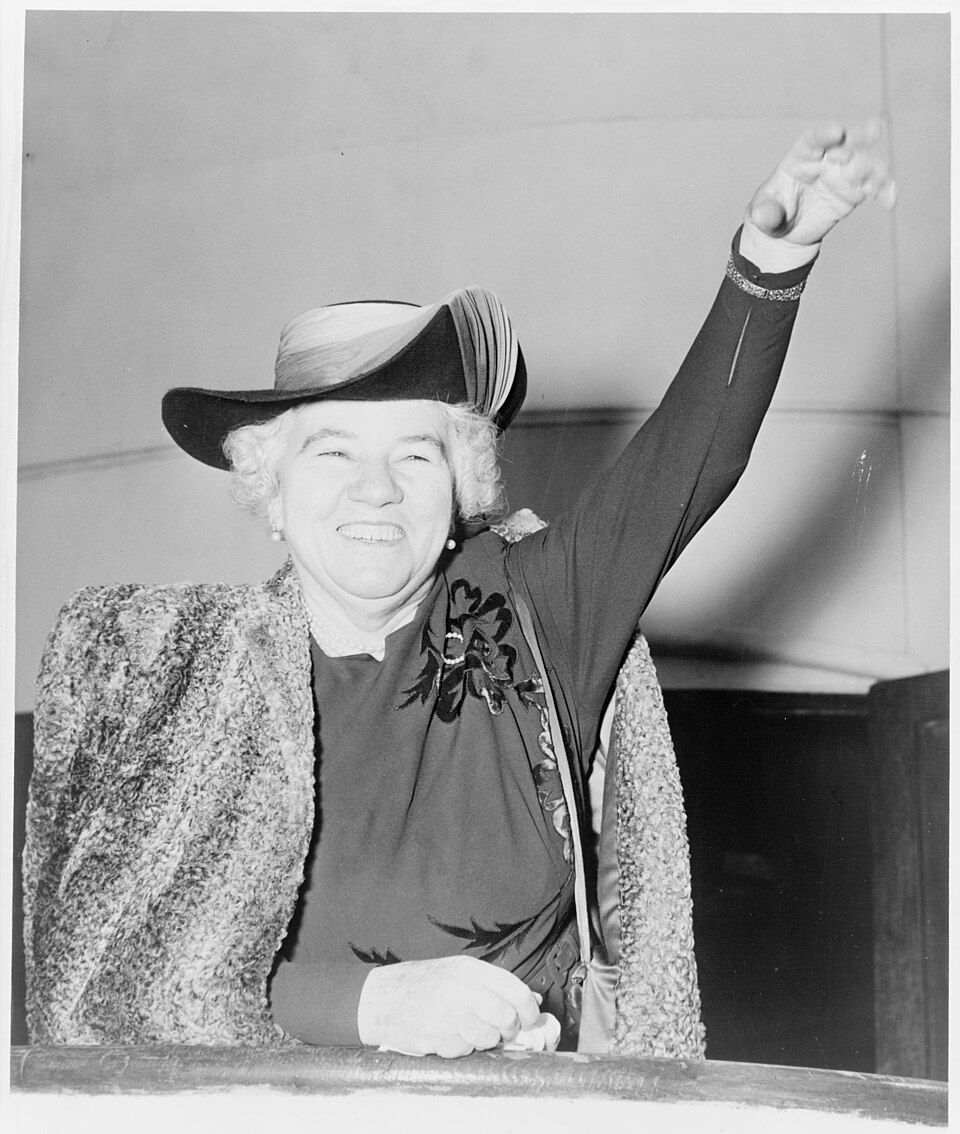
Kenny arrived in the United States in 1940 with letters of introduction and no invitation, having been effectively shut out at home. The Mayo Clinic sent her to the University of Minnesota, where doctors watched her work on patients they had given up on.
They were convinced. The Sister Kenny Institute opened in Minneapolis on December 17, 1942, and within a few years her method was standard American practice. She was based there for eleven years and trained a generation of therapists.
Public recognition ran ahead of the profession's. Rosalind Russell played her in Sister Kenny in 1946 and was nominated for an Academy Award. In 1951 Kenny displaced Eleanor Roosevelt at the top of Gallup's most-admired-woman poll — the only woman to do so in the poll's first decade. Congress granted her the right to enter and leave the United States without a visa, an honour previously given only to Lafayette.
Kenny died on November 30, 1952 in Toowoomba, Queensland, at 72, three years before the Salk vaccine made the argument moot.
Related
Sources
- Elizabeth Kenny, for the chronology, the royal commission and her American reception. Accessed September 9, 2026.
- Sister Elizabeth Kenny. MNopedia, Minnesota Historical Society. Accessed September 9, 2026.
- And They Shall Walk, Elizabeth Kenny with Martha Ostenso, 1943. Accessed September 9, 2026.