
Clara Maass volunteered as a human subject in the experiments that proved how yellow fever is transmitted. She died of the disease at twenty-five, and her death stopped the research.
Newark
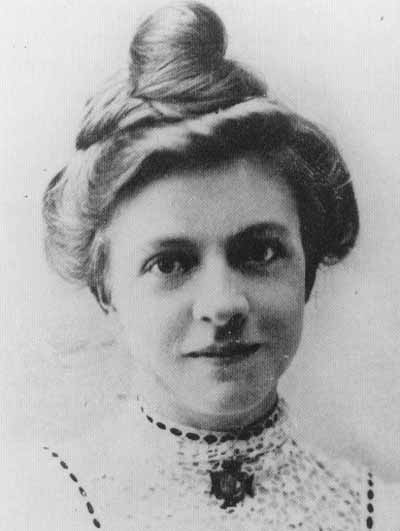
Maass was born on June 28, 1876 in East Orange, New Jersey, the eldest of nine children of German immigrants. She started earning at fifteen, at an orphans' home, to help support them.
She entered the Christina Trefz Training School for Nurses at the Newark German Hospital and graduated in 1895. By 1898 she was head nurse. She was twenty-two.
Contract nurse
When the Spanish-American War began, Maass signed on as a contract nurse with the Army — the status the Army used before the Nurse Corps existed, on short engagements at low pay with no rank and no benefits.
She served from October 1898 to February 1899 in Jacksonville, Savannah and Santiago, and volunteered again from November 1899 with the Eighth Army Corps in the Philippines, until she caught dengue fever and was sent home in mid-1900.
In both places she saw the same thing: far more soldiers dying of yellow fever than of combat. Nobody knew how it spread. The prevailing theory blamed contaminated clothing and bedding.
Havana
In late 1900 Walter Reed's Yellow Fever Commission in Cuba began testing Carlos Finlay's hypothesis that the disease was carried by mosquitoes. Testing it meant deliberately infecting people, and the Army paid volunteers a hundred dollars, with another hundred if they fell ill.
Maass went to Havana in October 1900 and volunteered. Her stated reason was that a mild induced case might confer immunity, which would let nurses work the fever wards safely — and the money went home to her mother and siblings.
She was bitten in March and again in June 1901 and had a mild attack. When it became clear the researchers were unsure whether a mild case protected against a severe one, she volunteered again to settle the question.
She was bitten on August 14, 1901. This time the disease was severe. She died ten days later, on August 24, 1901, aged twenty-five.
Afterwards
The public reaction to a young nurse dying in a paid experiment was fierce, and human trials of yellow fever in Cuba ended. The mosquito hypothesis was by then established, and the sanitation campaigns built on it cleared yellow fever from Havana and made the Panama Canal possible.
Maass was buried in Newark under a headstone paid for by public subscription. In 1952 the Newark German Hospital, by then Lutheran Memorial, was renamed Clara Maass Memorial Hospital; it still operates as Clara Maass Medical Center in Belleville.
Cuba put her on a postage stamp in 1951. The United States followed in 1976 with a 13-cent stamp, the first American stamp to honour a nurse.
She is also a case that nursing ethics teaching still uses, because the questions it raises — informed consent, payment for risk, and a young woman's obligation to a family that needed the money — are not settled by her courage.
Related
Sources
- Clara Maass, for the chronology, the experiments and the commemorations. Accessed September 9, 2026.
- Clara Louise Maass. U.S. National Library of Medicine. Accessed September 9, 2026.
- The Walter Reed Yellow Fever Commission. Claude Moore Health Sciences Library, University of Virginia. Accessed September 9, 2026.